
Your bedroom should be the quietest room in your life. Not quiet as in silent — quiet as in nothing competing for your attention. That’s the idea behind a cocoon bedroom. You wrap the space in soft color and layer it with fabrics that feel good against skin. Then you strip away everything that keeps your brain buzzing after the lights go down. The result is a room that looks calm and pulled-together, but one that actually helps you fall asleep faster and stay asleep longer.
This isn’t about spending a fortune on designer furniture. It’s about making a handful of intentional choices with color, texture, light, and temperature. The kind that turn a regular bedroom into a room you genuinely look forward to walking into at the end of the day.
What Makes a Bedroom Feel Like a Cocoon
A cocoon bedroom isn’t minimalism. That’s the first thing people get wrong. Minimalism strips things away for the sake of less. Cocooning wraps things around you for the sake of comfort. The goal isn’t an empty room. It’s a room where every surface, fabric, and light source works together to lower your guard.
Clearing the Visual Noise Your Brain Can’t Ignore
Your nervous system processes your environment whether you’re paying attention or not. A stack of mail on the dresser. A phone charging with notifications blinking on the nightstand. A sharp contrast between white ceiling and dark walls. Your brain registers all of it, even when you’re trying to wind down.
A cocoon-style bedroom eliminates those small friction points. Surfaces stay clear. Colors flow continuously. Technology is either hidden or powered off. The room sends one message: nothing here needs your attention right now.
Why Curves and Soft Edges Feel Safer Than Sharp Lines
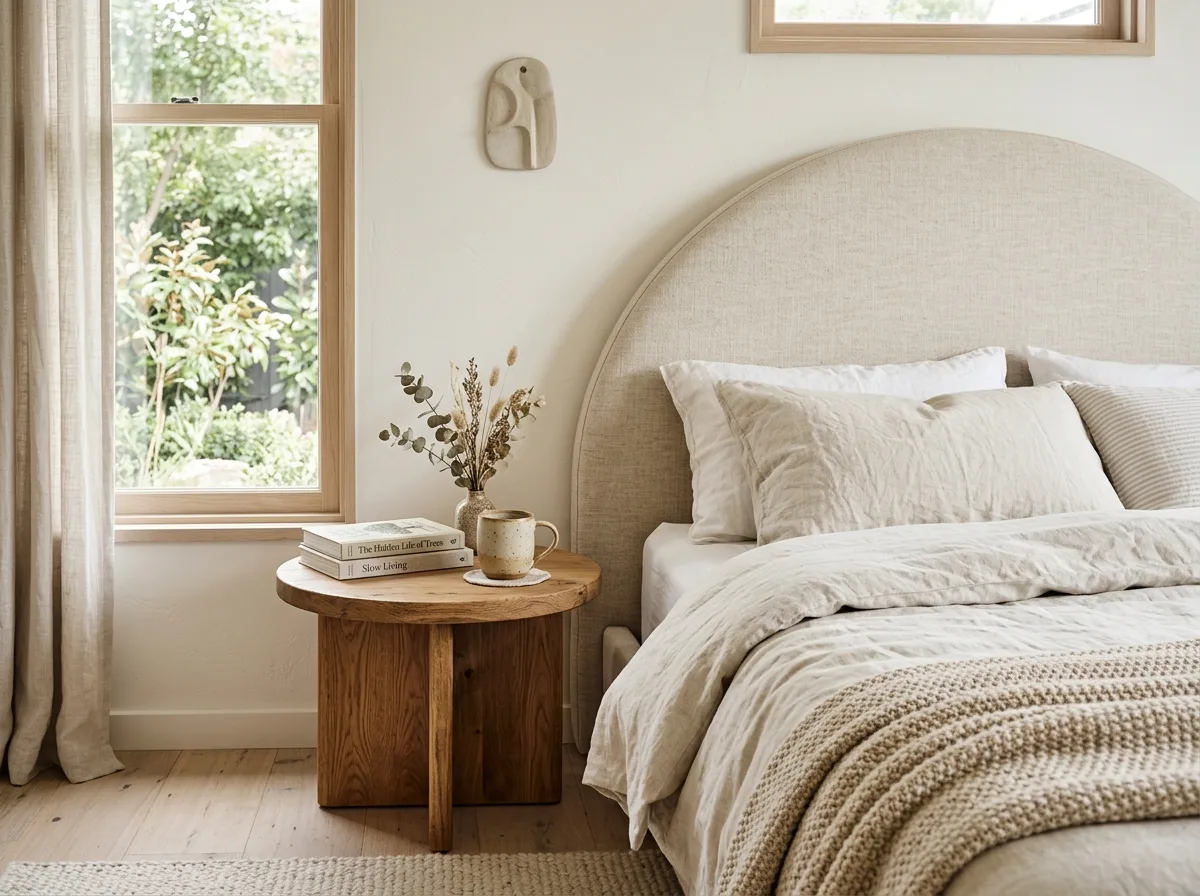
This sounds like a minor design choice, but it matters more than most people realize. Research in environmental psychology shows rounded shapes feel less threatening than angular ones. A curved headboard, a round side table, an arched mirror — these signal safety on a level you don’t consciously notice.
If your current furniture has hard edges everywhere, you don’t need to replace all of it. Even swapping one or two key pieces softens the entire feel of the room.
Sleep Science That Should Shape Every Bedroom Decision
A bedroom that looks beautiful but keeps you awake at night has failed at its primary job. Before you pick paint colors or shop for throw blankets, get the environmental basics right. Three factors have the biggest impact on sleep quality, and they cost very little to fix.
The Exact Temperature Range for Better Sleep
Your body needs to drop one to two degrees in core temperature to fall asleep. According to the Sleep Foundation, the ideal bedroom temperature sits between 60 and 67°F (15.5–19.4°C). Most sleep researchers point to 65°F (18.3°C) as the sweet spot.
Here’s what most people miss: heavy bedding in a cool room works better than light bedding in a warm room. The weight of the blanket provides sensory comfort. The cool air lets your body thermoregulate properly. If your bedroom runs warm, a fan and breathable linen sheets will do more for your sleep than a new mattress.
How Light Exposure Before Bed Disrupts Melatonin
Melatonin — the hormone that regulates your sleep-wake cycle — only kicks in when your brain senses darkness. Blue light from screens suppresses it. So does bright overhead lighting.
The fix is straightforward. Switch to dim, warm-toned light sources 30 to 60 minutes before bed. Keep screens out of the bedroom entirely if you can manage it. Most people know this. Very few actually do it. The ones who commit notice the difference within a few nights.
Quieting a Room Without Soundproofing the Walls
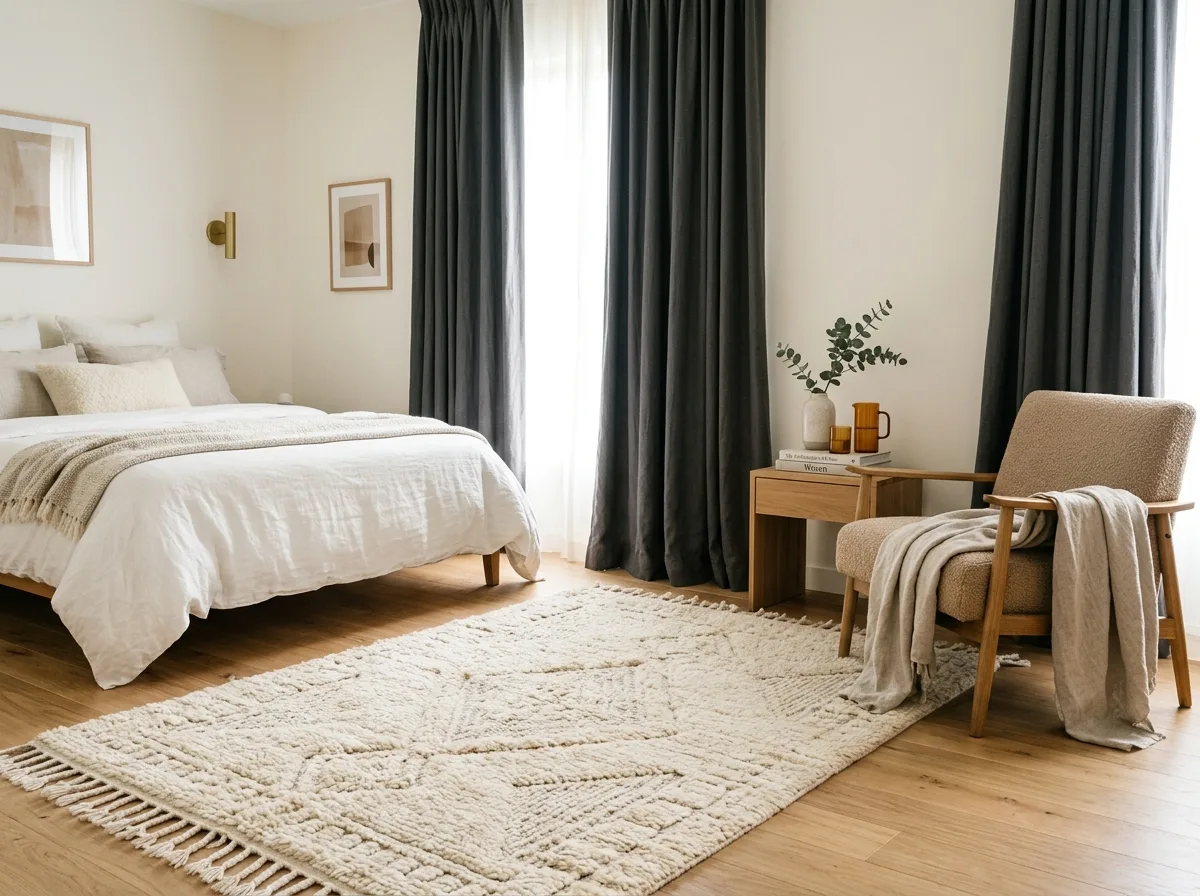
You don’t need acoustic panels. What you need are soft surfaces that absorb sound instead of bouncing it around. A thick area rug on a hard floor. Lined blackout curtains instead of bare blinds. An upholstered headboard against a shared wall. These choices serve double duty — they improve the room’s look and its acoustics at the same time.
If outside noise is persistent, a white noise machine set to a consistent low tone masks the irregular sounds that cause micro-awakenings through the night. It’s the unpredictable noises — a car horn, a door slam — that pull you out of deep sleep, not steady background sound.
Three Design Moves That Create the Cocoon Effect
Once the sleep environment is dialed in, the design layer is where the room starts to feel special. These three choices have the most visual and tactile impact for the effort involved.
Paint Everything the Same Color — Ceiling Included
Color drenching is the single most transformative technique for a cocoon bedroom. It’s also the one most people lose their nerve on. The idea: paint your walls, ceiling, trim, and doors in the same shade or closely related tones. This removes the hard visual boundary where wall meets ceiling.
The effect is immediate. The room feels taller, softer, and enveloping — like being inside a shell rather than a box.
Won’t painting everything one color make the room feel flat? The opposite happens. When every surface shares the same tone, texture differences become more visible. The grain of the wood, the weave of the curtains, the nap of the rug — all of it comes forward.
The shades that work best for cocooning:
- Warm Taupe and Ivory: Soft neutrals that reflect ambient light without glare.
- Muted Sage and Olive: Grounding earth tones that feel naturally calming.
- Deep Graphite or Warm Slate: Darker tones that create an intimate, twilight mood.
The ceiling is the surface people skip. Don’t. A white ceiling on color-drenched walls breaks the whole effect. It’s the single detail that separates a room that feels wrapped from one that still feels like a box with painted sides.
Mix Textures You Actually Want to Touch
Cozy isn’t just visual. It’s tactile. The fabrics in your bedroom should make you want to reach out and touch them. Skip anything shiny or synthetic-feeling and go for materials with natural weight and surface interest:
- Washed Linen: Breathable, slightly rumpled, and cool in summer. The best year-round bedding fabric for temperature balance.
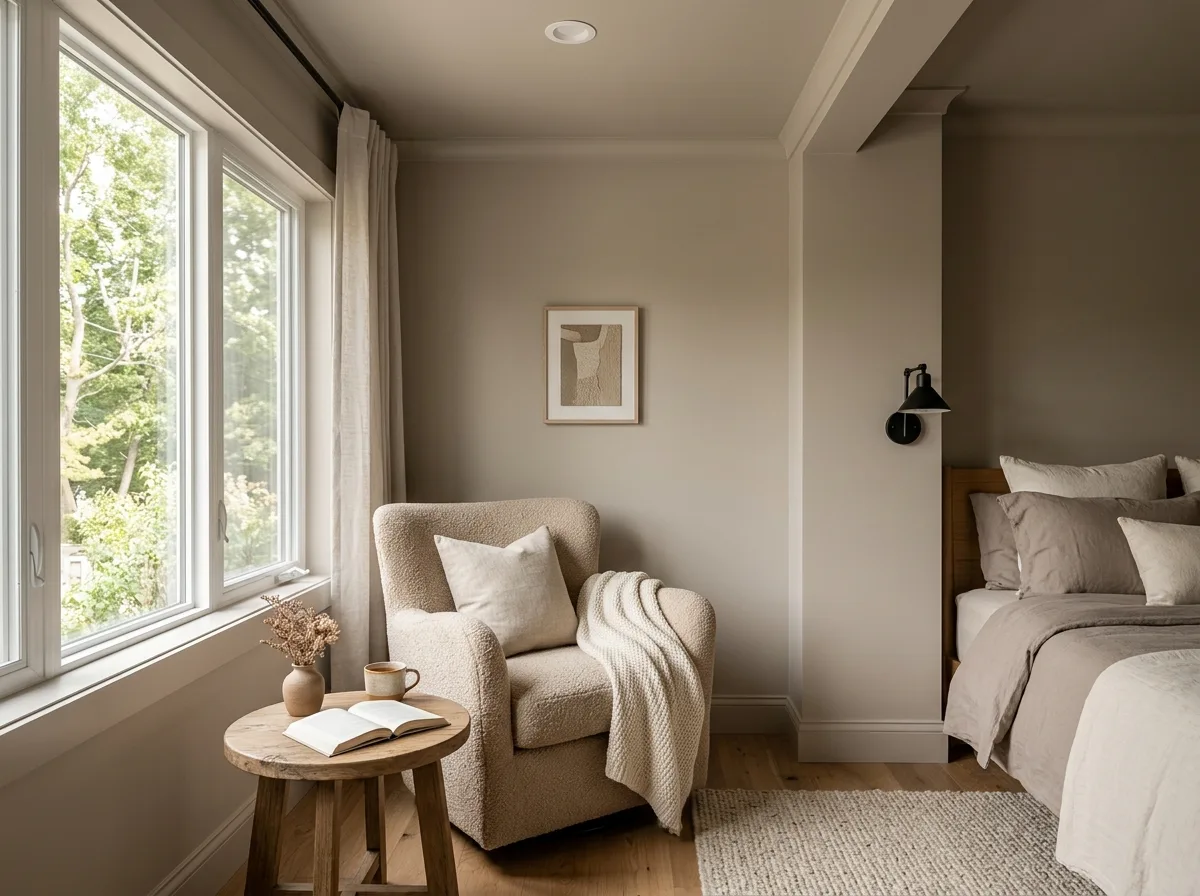
- Bouclé: Those nubby, looped yarns you see on modern accent chairs and statement headboards. It adds cloud-like depth wherever you put it.
- Velvet and Wool: Heavier fabrics that work well for throw blankets and curtain linings. They add warmth and absorb sound.
Layer them. Linen sheets under a wool throw with a bouclé pillow on an upholstered chair. The mix of weights and textures makes the room feel rich without trying too hard. Choosing the right bedding combination for your climate is a whole subject in itself, but the core principle is simple: pair lighter layers against skin with heavier layers on top.

An Oversized Headboard Does More Than Look Good
A tall, upholstered headboard — especially one that extends wider than the bed frame — is the anchor piece of a cocoon bedroom. It absorbs sound behind your head. It gives you a soft backrest for reading at night. And visually, it wraps around you in a way that a bare wall or a slim wooden frame never will.
If you can only change one piece of furniture, make it this one. The difference it makes to how the bed feels as a destination is hard to overstate.
How to Light a Cocoon Bedroom Without Overhead Fixtures
Lighting makes or breaks the mood. One overhead fixture turns any bedroom into something that feels closer to a waiting room than a retreat. The fix isn’t complicated — you spread the light across multiple lower sources instead of blasting it from the ceiling.
Three Light Sources That Replace a Ceiling Light
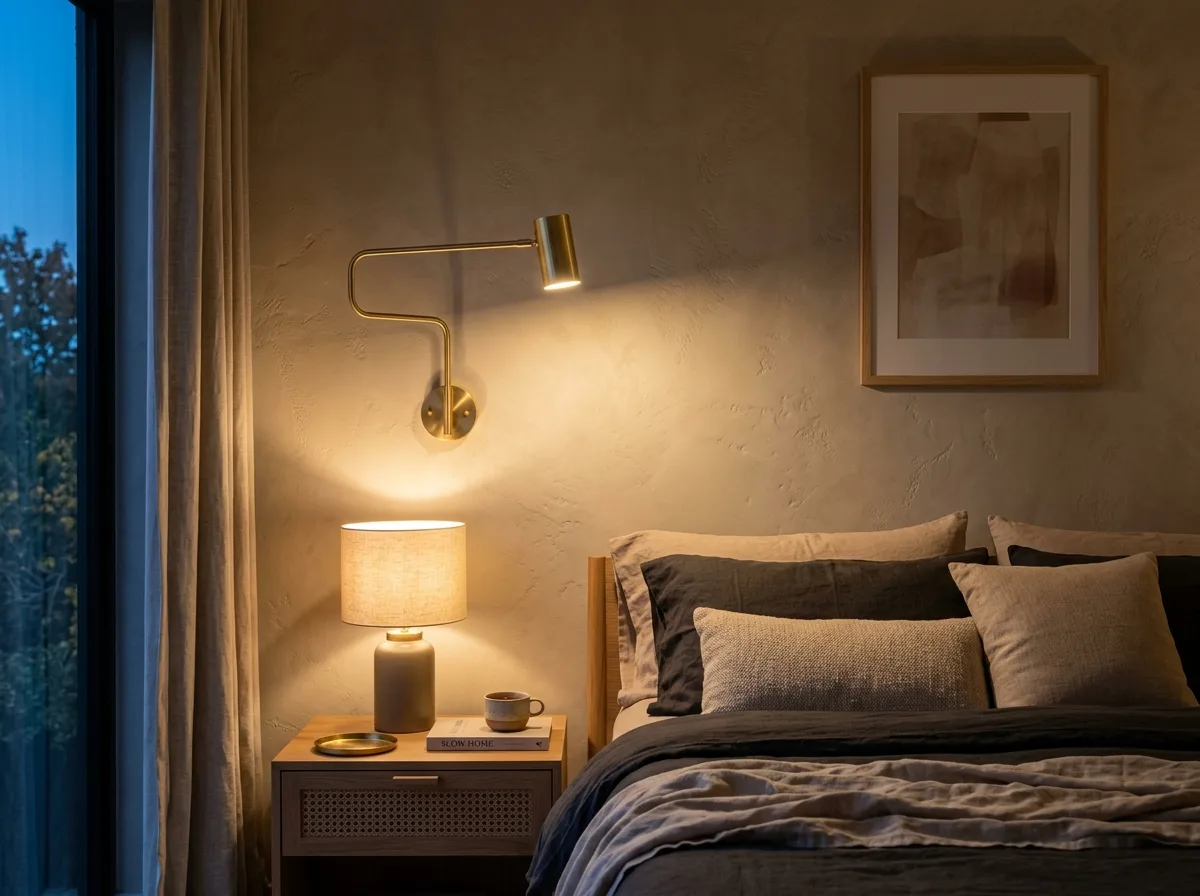
- Dimmable Bedside Lamps: Set at eye level with warm-toned bulbs. Bright enough to read by, soft enough not to sting.
- Wall Sconces: They wash light along painted surfaces, highlighting texture and color without glare. Especially effective on color-drenched walls.
- Under-Bed or Recessed Strip Lighting: Warm indirect light at floor level for gentle nighttime navigation without turning on a lamp.
The detail most people overlook: bulb color temperature. A “soft white” LED at 3000K still looks clinical in a cocoon bedroom. Drop to 2700K or even 2200K for a true warm glow. This one swap changes the entire atmosphere of the room, and it costs almost nothing.
Small Details That Make the Room Feel Alive
A cocoon bedroom shouldn’t feel sterile. One or two low-maintenance plants — a pothos on a shelf, a snake plant in the corner — bring organic energy without adding clutter. This kind of biophilic element connects you to something living, and that matters in a room designed for rest.
Keep decorative objects minimal and personal. A book you’re actually reading. An aromatherapy diffuser with a scent you genuinely like. A single framed photo that means something to you. Everything on a surface should earn its spot by being either beautiful or useful. Preferably both.

Mistakes That Break the Cocoon Effect
- Oversized Furniture in Tight Spaces: A king bed in a small room with massive nightstands leaves nowhere to walk. Keep at least 24 to 30 inches of clear space around the bed’s perimeter. If your room can’t accommodate that, downsize the nightstands first — they make the biggest difference for the least sacrifice.
- A Single Ceiling Light as Your Only Source: This is the most common lighting mistake in bedroom design. Overhead light keeps your nervous system on alert. Layer dimmable sources at lower levels instead.
- Too Many Competing Colors: The cocoon effect depends on tonal harmony. Stick to three or four closely related shades. One bold accent is fine. Five colors fighting for attention will undo everything the color drenching achieved.
- Visible Surface Clutter: Chargers, paperwork, random accessories. Your brain reads every object on a surface as something unresolved. Use drawer organizers and closed storage to keep nightstands and dressers completely clear.
The Part That Makes It All Worth It
Here’s what nobody tells you about a cozy cocoon bedroom: the real payoff isn’t how it looks in photos. It’s the moment you walk in at night and your shoulders drop. Your breathing slows without you deciding to slow it. The room does the work your evening routine is supposed to do.
It won’t happen because you bought expensive sheets. It happens because every choice in the room points in the same direction. The paint on the ceiling. The temperature of the air. The light on your nightstand. All of it saying the same thing: you’re done for the day.
Start with one change. The color, the lighting, or the temperature. You’ll feel the difference the first night.
Quick Comparison: Cocoon Bedroom Fabrics
| Fabric / Material | Texture & Weight | Primary Benefit | Best Placement |
|---|---|---|---|
| Washed Linen | Breathable, rumpled, lightweight | Year-round temperature balance and cooling | Sheets & pillowcases against skin |
| Bouclé | Nubby, looped yarns, cloud-like depth | Adds visual depth and tactile softness | Accent chairs, headboards, decorative pillows |
| Velvet & Wool | Heavy, plush, high-density weave | Provides extra warmth and absorbs ambient sound | Throw blankets, curtain linings |
Frequently Asked Questions
What is a cocoon bedroom?
A cocoon bedroom is an interior design concept centered around creating an enveloping, soothing space using soft colors, layered textures, and low-level lighting. Unlike strict minimalism which focuses on eliminating items, cocooning surrounds you with cozy, sound-absorbing elements designed to lower sensory input and improve sleep quality.
What is the ideal bedroom temperature for sleep?
According to research cited by the Sleep Foundation, the ideal bedroom temperature for sleep is between 60°F and 67°F (15.5°C to 19.4°C), with 65°F (18.3°C) considered the optimal setting. Maintaining a cool room helps your body naturally drop its core temperature to initiate and sustain deep sleep.
Why should you paint the ceiling the same color as the walls?
Painting the ceiling, trim, and walls in the same shade—a method known as color drenching—eliminates the sharp contrast created by a traditional white ceiling. This creates a seamless visual envelope that makes the bedroom feel taller, softer, and more intimate.
How does light exposure before bed affect sleep quality?
Exposure to bright overhead lighting and blue light from electronics suppresses melatonin, the hormone responsible for controlling your sleep cycle. Dimming the lights and switching to warm-toned bulbs (2200K to 2700K) 30 to 60 minutes before bed signals your nervous system to prepare for rest.
Do you need soundproofing to make a bedroom quiet?
You do not need structural soundproofing to quiet a bedroom. Adding soft, dense materials like thick area rugs, heavy lined blackout curtains, and upholstered headboards effectively absorbs echo and ambient noise while creating a cozier environment.
