
Dining rooms are meant for evening conversation, shared food, and atmosphere. Unlike a home office, you rarely spend eight straight hours staring at these walls. That makes the dining space the safest spot in the house for expressive design. Still, the fear of turning a dining area into a chaotic, dizzying box is real.
You want warmth and personality. You do not want a room that gives your dinner guests a headache. Balancing bold wallcoverings comes down to three levers: placement, pattern scale, and tactile finishes. Work with your room’s existing architecture, and the pattern will feel grounded every time.
Why Dining Spaces Handle Bold Pattern So Well
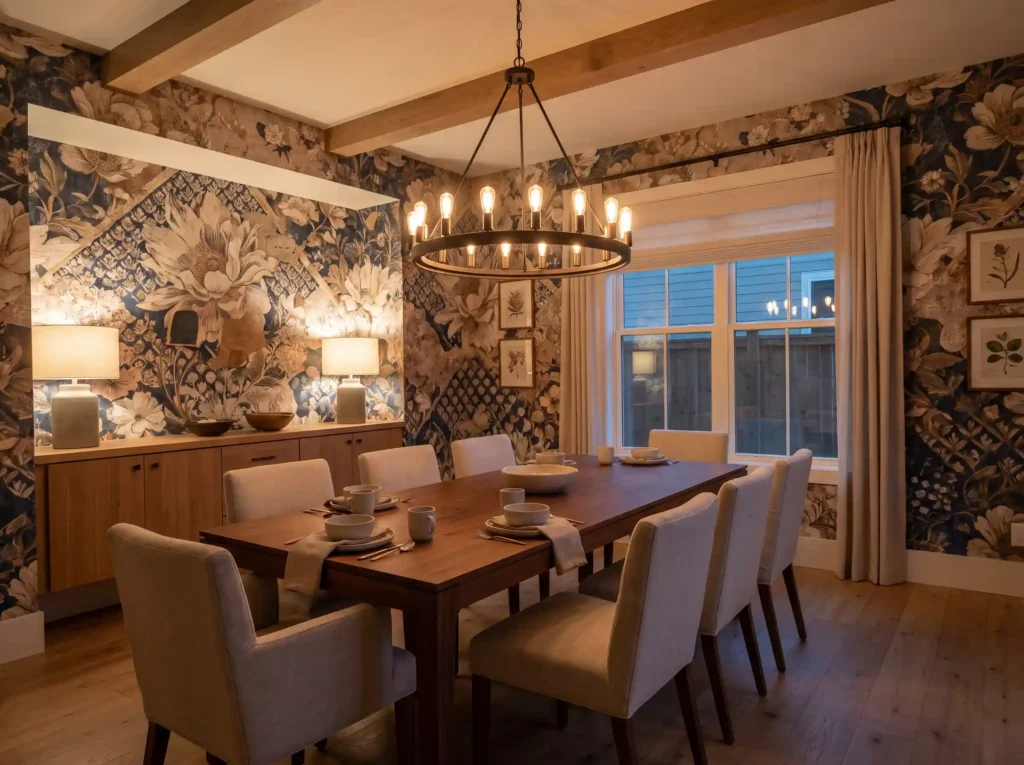
A living room demands visual quiet because you live in it all day. Dining rooms behave differently. They are experiential rooms. Guests step in, sit under warm lighting, and settle into conversation. A rich print wraps the space and creates intimacy. It sets an intentional mood that plain off-white paint rarely achieves.
What about modern open-plan layouts? Wallpaper acts as an invisible wall. Covering a dedicated dining wall defines the eating zone instantly. You get a distinct, cozy dining room without building actual partition walls.
Strategic Spots to Hang Dining Room Wallpaper
You do not need to paper every square inch to transform the room. In fact, limiting where the pattern goes often produces the most sophisticated result.
The Grounded Accent Wall
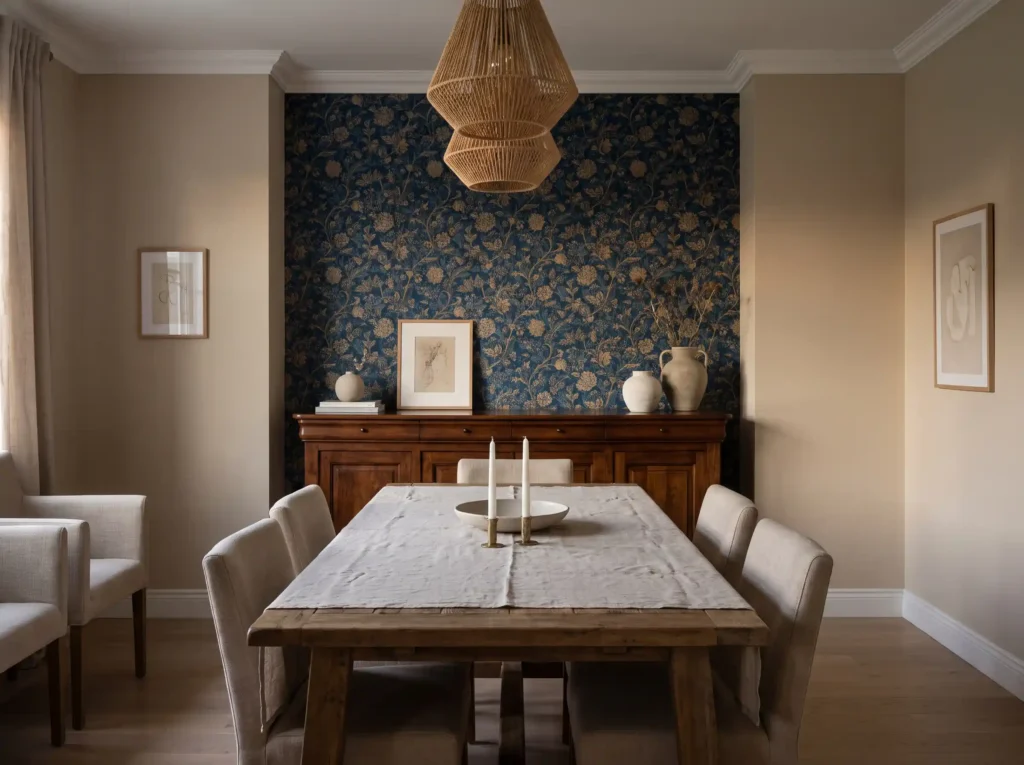
If you fall in love with a dense print, pick one primary wall. The best location sits right behind your buffet or sideboard. Alternatively, choose the wall directly framed by the doorway when guests walk in. This approach anchors your dining table. It delivers the visual drama you want while leaving the remaining three walls calm.
The Chair Rail and Wainscoting Technique
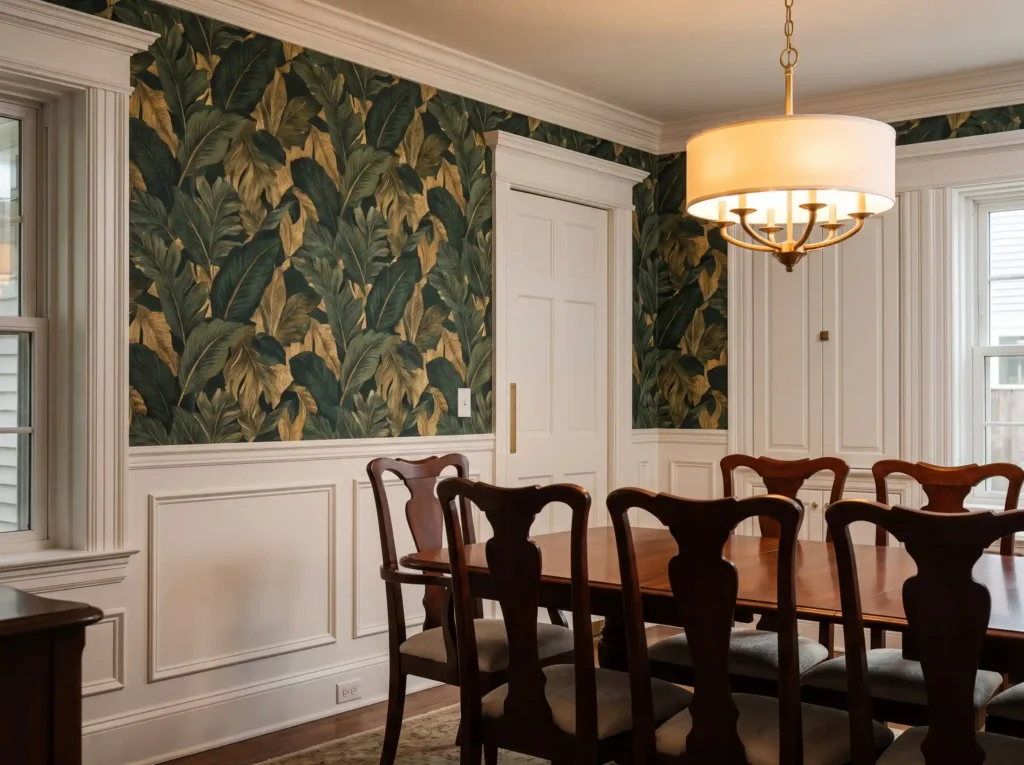
Here is a trick interior designers use constantly. Pair your wallpaper with wainscoting or tongue-and-groove paneling on the lower wall. Run the paper only on the top portion, above the chair rail. This cuts the visual intensity of the pattern in half.
What usually happens in real life? Dining chair backs bump into walls. Wood paneling or sturdy MDF protects drywall from scuffs during dinner parties. Picture frame molding on the bottom also gives bold florals a tailored, classic foundation.
Recessed Niches and Framed Panels
Look around your room for natural architectural breaks. Do you have an arched alcove, a built-in china cabinet, or open display shelving? Line the back panels with patterned paper. It creates unexpected depth without taking over the room. Another smart option is framing a scenic mural inside picture molding. It reads like custom artwork rather than wallpaper.
Dialing In Pattern Scale, Texture, and Furniture
Choosing the print is where most homeowners get stuck. The wrong scale can make a small room feel tight and chaotic.
Mastering Pattern Scale
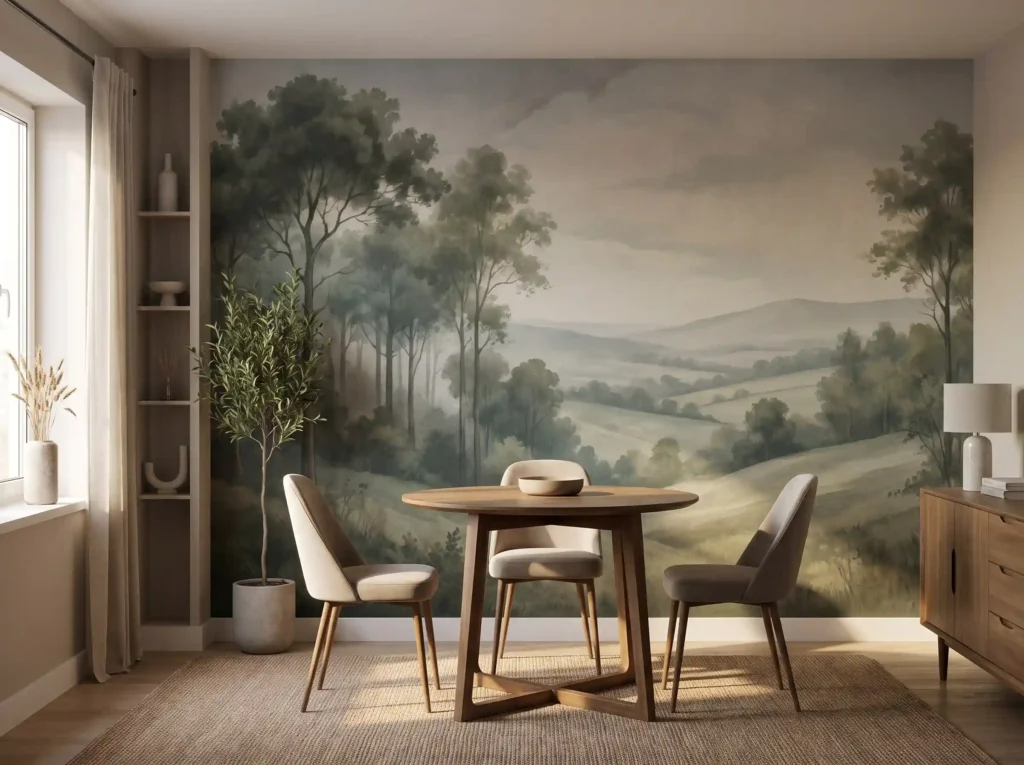
One thing most people overlook is how large murals behave in small dining spaces. Intuition says tiny rooms need tiny patterns. In practice, the opposite is often true. A sweeping scenic landscape or misty forest mural creates artificial horizon lines. It fools the eye into seeing outdoor depth, making compact rooms feel bigger.
Delicate, tight botanicals also work nicely because the fine linework stays quiet. The real danger zone is mid-sized, repetitive geometric prints. They create visual vibration that exhausts the eye quickly. Vertical motifs and climbing vines do the opposite. They draw the eye upward toward the ceiling molding.
Texture as an Alternative to Graphic Prints
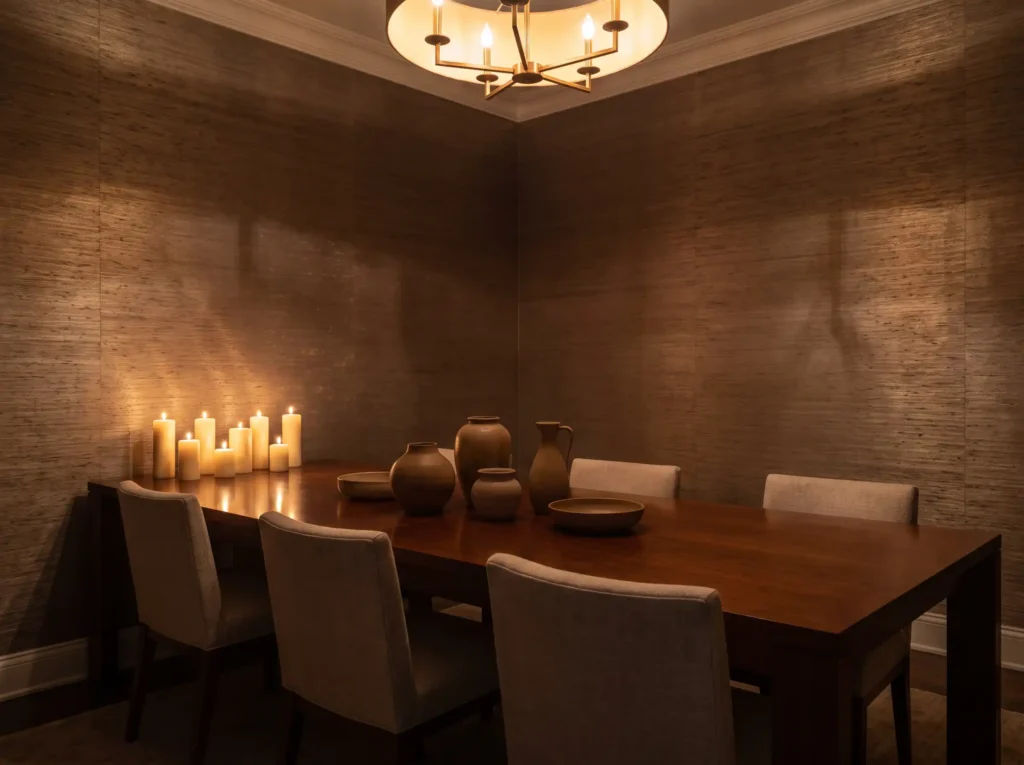
Pattern is not your only path to depth. If you prefer neutral palettes, switch your focus to tactile wallcoverings. Natural grasscloth, woven raffia, and embossed papers add immense warmth. They also dampen room echo, which makes dinner conversations much easier to hear.
Notice how your lighting hits the paper at night. Papers with subtle metallic sheens softly bounce candlelight across the table.
Coordinating Trim and Dining Furniture
Never match your wallpaper color directly to your dining table or chairs. Matching everything creates a flat, showroom look with zero personality. Instead, pull out an accent color from the pattern. Use that secondary tone on your baseboards, window trim, or seat cushions.
If your dining set is ornate dark wood, keep the wallpaper pattern clean and quiet. If your furniture is sleek and modern, you can lean into expressive, painterly prints.
Practical Installation Steps and Common Mistakes
A gorgeous paper will still disappoint you if it fails under everyday dining conditions.
- Durability Around Food and Guests: Dining rooms see spills, sauce splatters, and scraping chairs. In busy family homes, choose scrubbable, vinyl-coated wallcoverings that wipe clean with a damp cloth.
- Lighting Changes Between Day and Night: Pigments look entirely different under direct sunlight than they do under 2700K chandelier light. Tape physical swatches to your wall and inspect them during an actual evening meal.
- Hiding the Final Seam: Wallpaper rolls rarely line up with absolute perfection at the very last seam. Start hanging your first strip behind a tall china cabinet or beside an entry door. That way, the mismatched seam sits completely out of view.
Pulling the Dining Room Together
Using wallpaper in a dining room does not require turning your home into a loud museum. Anchor bold prints against solid wood molding. Test your lighting after dark. Pick textures that make guests want to stay at the table just a little longer.
Sources
- Homes & Gardens: Dining Room Decor Ideas & Trends
- Architectural Digest: Interior Design and Dining Room Ideas
- The Spruce: Dining Room Decor & Wall Ideas
- Graham & Brown: Dining Room Wallpapers and Murals
- Livingetc: Modern Dining Room Wallpaper Trends
Quick Comparison
| Placement Strategy | Recommended Wall Location | Best Pattern Style | Key Practical Benefit |
|---|---|---|---|
| Grounded Accent Wall | Behind buffet or sideboard, or framed by doorway | Dense prints | Anchors table; delivers drama while keeping three walls calm |
| Chair Rail & Wainscoting | Upper wall portion above chair rail | Bold florals and intense prints | Cuts visual intensity in half; protects drywall from chair scuffs |
| Recessed Niches & Framed Panels | Arched alcoves, built-in cabinets, or picture frame molding | Scenic murals or patterned papers | Adds unexpected architectural depth; functions like custom artwork |
Frequently Asked Questions
Why is the dining room a good place for bold wallpaper?
Unlike home offices or living rooms where you spend all day staring at the walls, dining rooms are experiential spaces used primarily for evening meals and conversation. The limited time spent in the room makes it safe for expressive, bold prints that wrap the space and establish an intimate, intentional mood.
How can wallpaper define an open-plan dining space?
Wallpaper acts as an invisible divider in open-concept layouts. Applying paper to a dedicated dining wall establishes the eating zone immediately, creating a distinct and cozy dining room feel without the need to build physical partition walls.
Does wallpaper have to cover every wall in a dining room?
No, limiting where the paper is hung often yields the most sophisticated look. Homeowners can install paper on a single accent wall behind a sideboard, run it only above a chair rail to cut pattern intensity in half, or tuck it inside recessed alcoves and picture moldings.
What type of pattern makes a compact dining room feel larger?
Sweeping scenic murals and landscape prints fool the eye by introducing artificial horizon lines and a feeling of outdoor depth, making smaller dining areas feel more expansive. In contrast, tight botanical prints stay visually quiet, while mid-sized repetitive geometric patterns create visual vibration that can overwhelm the space.
What is the best wallpaper material for durability around food?
Scrubbable, vinyl-coated wallcoverings are ideal for high-traffic dining spaces because they can be easily wiped clean with a damp cloth after spills and sauce splatters. Alternatively, natural grasscloth and embossed papers add tactile warmth and help dampen room echo during dinner parties.
How should wallpaper coordinate with dining furniture and trim?
Avoid directly matching wallpaper colors to your dining table or chairs, which produces a flat, showroom look. Instead, pull a secondary accent color from the wallpaper pattern to use on trim, baseboards, or seat cushions, while balancing ornate dark wood furniture with quieter patterns.
