
Nothing ruins a relaxed dinner faster than overhead glare. When dining lighting is too bright, the room feels like an exam clinic. Make it too dim, and guests struggle to see what is on their plates.
Getting that warm, flattering glow comes down to specific numbers and basic physics. It is not just about picking an attractive chandelier. You have to manage color quality, hanging height, and room contrast. Done right, the space invites people to sit down and linger.
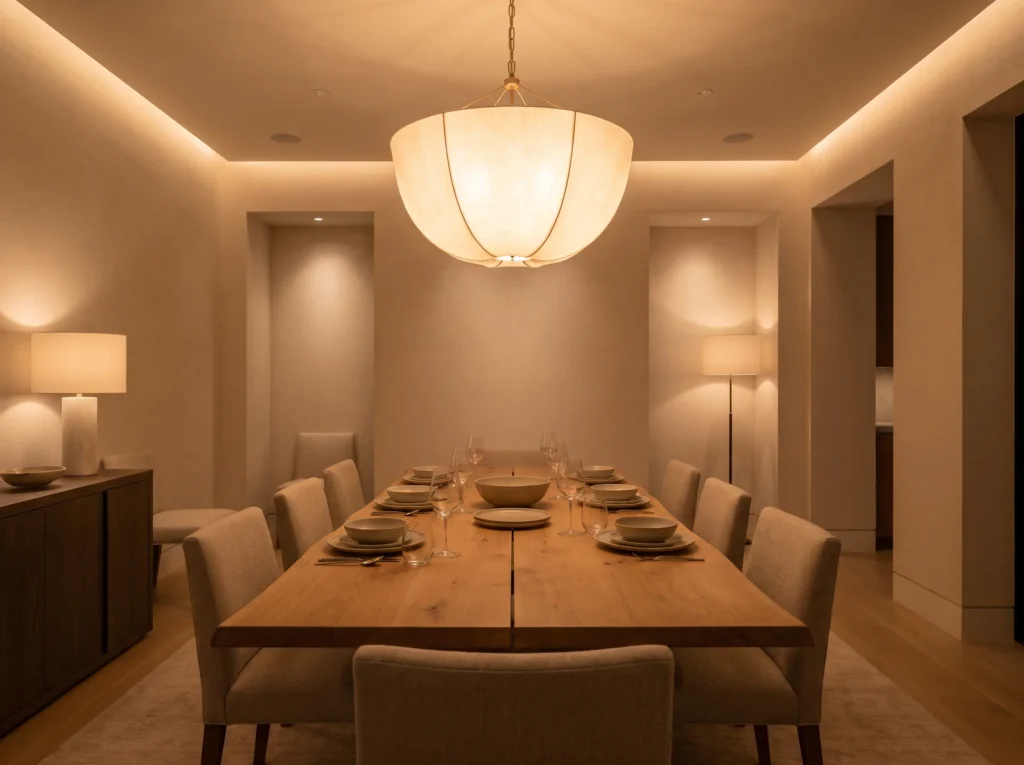
Light Quality: Dialing in Kelvin and Color Rendering
A dining room should never feel cold. The warmth of your space depends on the technical specs of your bulbs rather than the fixture itself.
Getting the Kelvin Rating Right (2700K to 3000K)
Color temperature determines whether your space feels cozy or icy. The Kelvin scale measures this tone.
For residential dining rooms, stick strictly to bulbs rated between 2700K and 3000K.
- 2700K: Matches the warm amber cast of traditional incandescent bulbs and candlelight. It works best for relaxed evening meals and intimate dinner parties.
- 3000K: Gives you a clean, warm white light. It flatters modern finishes, light woods, and architectural details without feeling chilly.
Avoid bulbs rated at 4000K or higher. They belong in commercial workrooms, not over a dinner table.
Why a 90+ CRI Rating Matters for Food and Faces
The Color Rendering Index shows how accurately a bulb reveals true pigment. Natural sunlight scores 100 on this scale.
Always look for LED bulbs with a CRI rating of 90 or higher.
What happens with cheap, low-CRI bulbs? Food looks gray, wood finishes look flat, and skin tones look dull. A 90+ CRI bulb keeps salads green, wine rich, and roasted food appetizing. This small technical detail transforms how dinner looks on the table.
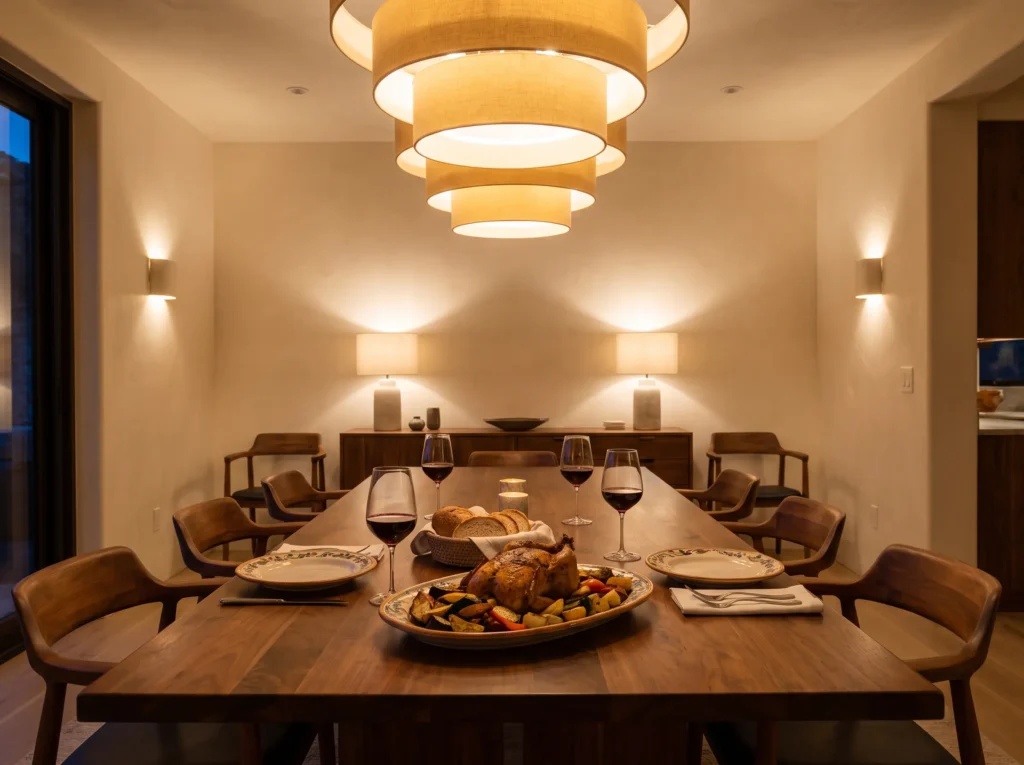
Sizing and Hanging Your Main Chandelier
A statement pendant anchors the room. Sizing it properly keeps the fixture from crowding your guests or getting lost in empty space.
Matching Fixture Width to Your Table
Scale your primary fixture to your dining table rather than the room perimeter.
- The Table Width Guideline: Your chandelier width should measure between one-half and two-thirds the width of your dining table.
- Room Dimension Formula: Add the room length and width in feet together. Convert that sum into inches to find a balanced fixture diameter.
- Table Shape Alignment: Pair round fixtures with round tables. Use linear chandeliers or two matching pendants over long, rectangular tables.
Clearances and Hanging Heights
Hang the bottom of your fixture 30 to 36 inches above the tabletop for standard eight-foot ceilings. If your ceilings are taller, add roughly three inches of height for every extra foot of ceiling clearance.
Here is what most people overlook: they measure everything while standing up.
Always sit in a dining chair before cutting the suspension cord or chain. You need clear sightlines across the table. If the bottom edge or a bare bulb blocks eye contact with the person across from you, adjust the height immediately.
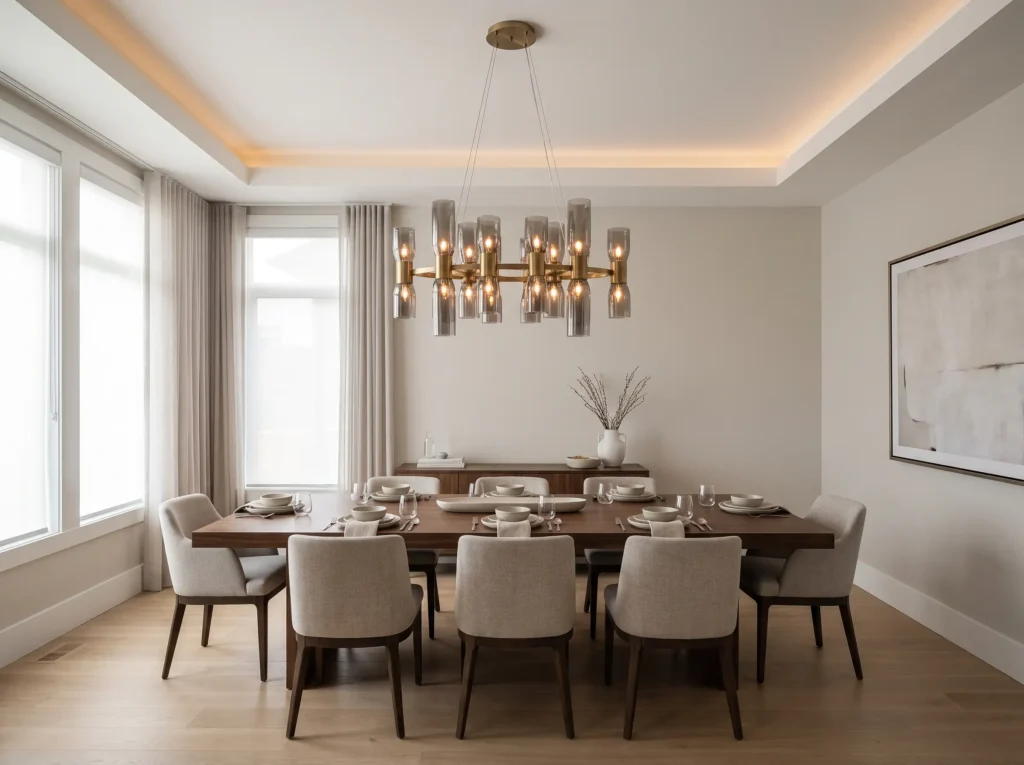
Building Three Distinct Lighting Layers
Relying on a single ceiling fixture is a common decorating trap. A single overhead bulb casts deep shadows under eyes and leaves corners pitch black. Instead, balance brightness across three separate tiers.
Ambient Light for General Balance
Ambient light provides the baseline illumination for walking into the room. Your central fixture handles part of this job by bouncing soft light off the ceiling and nearby surfaces.
Focused Downlight for the Tabletop
Task lighting directs downward illumination straight onto your tabletop. This focused beam highlights centerpieces and keeps food visible without spilling harsh brightness into diners’ eyes.
Accent Light on Walls and Credenzas
Accent lighting adds visual depth and keeps perimeter walls from fading into darkness.
- Wall Sconces: Mounted at eye level on side walls, sconces soften the edges of the room.
- Buffet Lamps: Small accent lamps on a sideboard provide low, flattering perimeter pools of light.
- Directional Spots: Angled ceiling fixtures can highlight framed artwork or textured wallpaper without washing out the room.
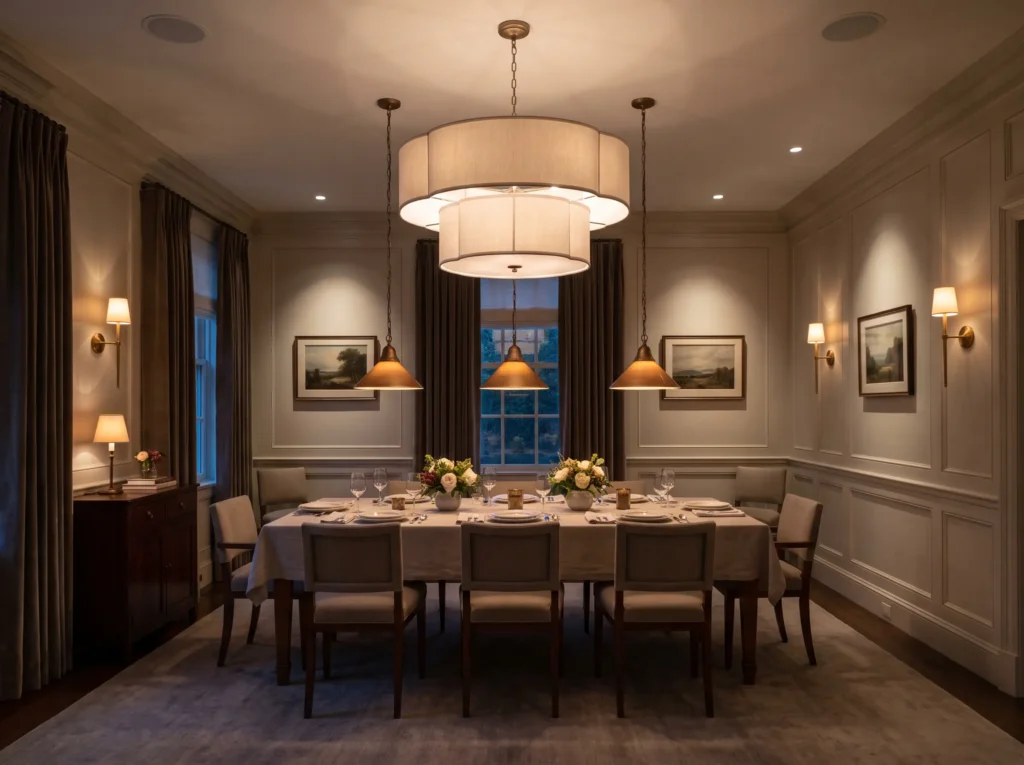
Choosing Shades and Diffusers That Block Direct Glare
Exposed filament bulbs look charming in showroom windows. In practice, bare filaments create brutal eye fatigue within twenty minutes. You need materials that scatter raw light evenly.
- Opal or Frosted Glass: Blurs the direct filament into a soft, even glow.
- Fabric Drum Shades: Linen or cotton shades shield direct bulb exposure while directing light upward and downward.
- Bottom Diffusers: Translucent acrylic discs beneath a drum pendant stop seated guests from looking directly into bare sockets.
- Reflective Table Precautions: High-gloss lacquer and glass tabletops act like mirrors. Direct downward spotlights bounce right into diners’ eyes. Choose shaded or diffused fixtures to prevent surface glare.
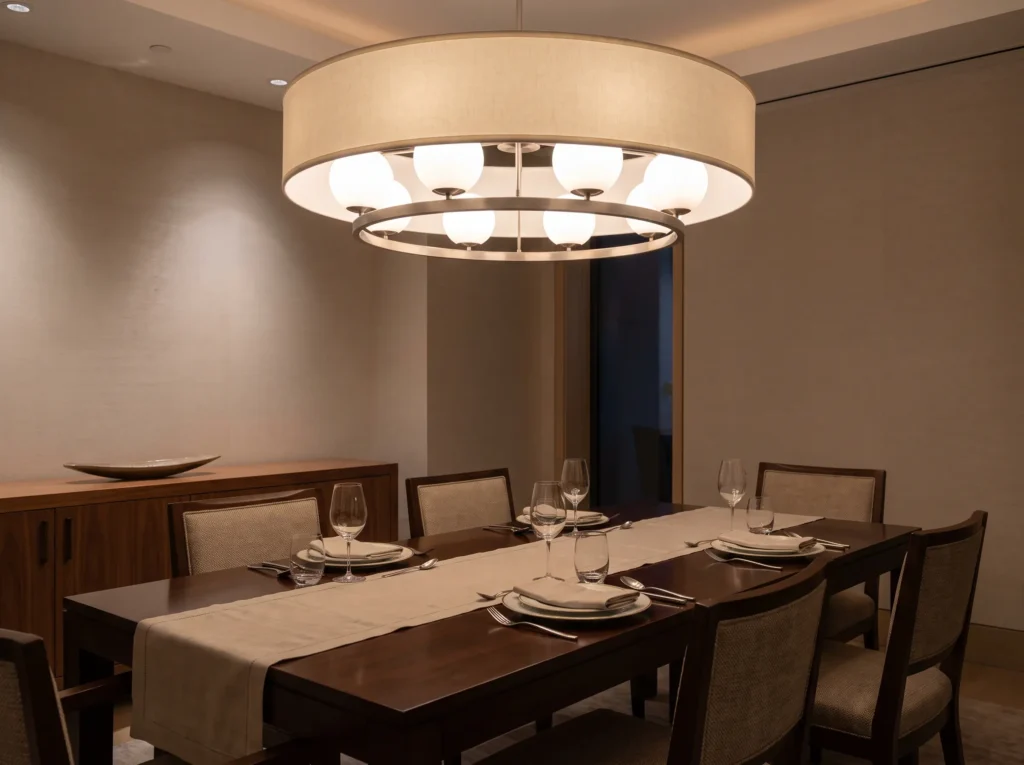
Practical Lighting Mistakes That Spoil the Mood
Small installation blunders can undermine an otherwise thoughtful layout.
- Leaving out an LED-compatible dimmer: A dimmer gives you total control. It lets you switch from afternoon homework sessions to low, relaxed evening dinners instantly.
- Mounting the fixture too high: Pulling the fixture up toward the ceiling breaks its visual connection to the table, making the room feel cold and cavernous.
- Ignoring an off-center ceiling box: Never center your light on a misplaced junction box if your table sits elsewhere. Swag the cord with a ceiling hook to center the light directly over the table.
- Buying cool-spectrum bulbs: Bulbs at 3500K and above turn dining rooms into office spaces. Keep light strictly warm.
The Final Touch for an Inviting Room
Great dining room lighting never draws attention to itself. It flatters the food, flatters your guests, and makes people want to linger long past dessert. Get the Kelvin rating right, install a dimmer, and keep bare bulbs out of direct sightlines. The atmosphere takes care of itself.
Sources
- Lumens – Lighting Guides and Design Tips
- Lightology – Chandelier Size, Height, and Layering Guides
- Residence Supply – Dining Room Lighting Placement Rules
- Waveform Lighting – Color Temperature and CRI Guidelines
- The Lamp Goods – Dining Room Brightness and Lumens Guide
- Lighting New York – Chandelier Sizing and Hanging Specifications
Quick Comparison
| Color Temperature | Light Appearance | Ideal Setting & Finishes | Dining Room Recommendation |
|---|---|---|---|
| 2700K | Warm amber cast (candlelight feel) | Relaxed evening meals and intimate dinner parties | Recommended |
| 3000K | Clean, warm white | Modern finishes, light woods, and architectural details | Recommended |
| 4000K+ | Cool, commercial white | Commercial workrooms | Avoid (feels chilly and clinical) |
Frequently Asked Questions
What is the best color temperature for dining room lighting?
The ideal color temperature for a residential dining room is between 2700K and 3000K. A 2700K bulb provides a warm, intimate amber glow similar to candlelight, while 3000K delivers a clean, warm white that highlights modern woods and finishes. Bulbs rated at 4000K or higher should be avoided because they cast a cold, clinical light.
How high should a chandelier hang above a dining table?
A dining chandelier should hang 30 to 36 inches above the tabletop for standard eight-foot ceilings. For ceilings higher than eight feet, add approximately three inches of hanging height for each additional foot of ceiling clearance. Always sit in a dining chair before cutting suspension cords to ensure the fixture does not obstruct eye contact across the table.
How wide should a dining room light fixture be?
Your main fixture width should measure between one-half and two-thirds the width of your dining table. Alternatively, you can add your dining room length and width in feet together and convert that sum into inches to find a balanced fixture diameter. Round fixtures pair best with round tables, while linear chandeliers or dual pendants suit rectangular tables.
Why is a high CRI rating important for dining room bulbs?
A Color Rendering Index rating of 90 or above ensures colors appear vibrant, natural, and true to life. Low-CRI bulbs make food look gray and unappetizing while rendering wood finishes and skin tones flat. A 90+ CRI bulb keeps meals visually appealing and creates a flattering environment for dinner guests.
Why is an LED-compatible dimmer necessary in a dining room?
A dimmer gives you flexible control over the room’s illumination, allowing you to switch instantly from bright daytime activities to an intimate, relaxed evening dinner. Without a dimmer, a single static brightness level can easily feel overwhelming and harsh during evening meals.
How do you prevent glare from dining table lights?
Glare can be prevented by choosing fixtures with opal or frosted glass shades, fabric drum shades, or bottom diffusers that shield bare filaments from direct sightlines. In addition, avoiding direct downward spotlights over high-gloss or glass tabletops stops harsh reflections from bouncing into diners’ eyes.
