
A great dining room looks gathered over years, not ordered from a single catalog page in one weekend. Blending crisp contemporary silhouettes with patinated vintage finds brings depth and individuality into the space. You get the comfort of modern design alongside the rich history of older furniture.
The challenge is keeping the mix deliberate. Throwing mismatched thrift store items around a clean table usually creates visual noise rather than charm. With a clear eye for scale, wood undertones, and structural anchors, you can easily balance multiple design eras.
Foundational Design Rules for Blending Furniture Eras
Successful eclectic rooms rely on intentional tension. Rather than giving every piece the same visual weight, professional stylists use contrast to help different periods complement each other.
Anchor the Room with an 80/20 Design Ratio
Committing to a primary style keeps the room grounded. Let one aesthetic dominate roughly 80 percent of the dining room. Dedicate the remaining 20 percent to contrasting accent pieces.
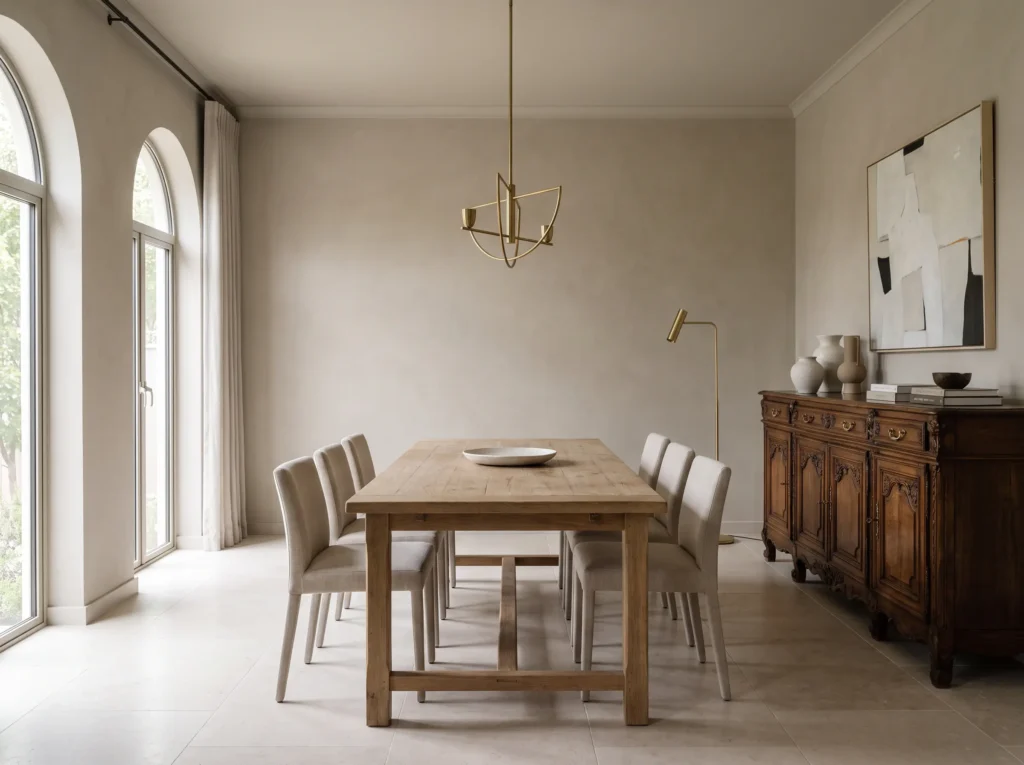
If you love minimalist spaces, use modern chairs and clean architectural lighting for your main foundation. Then add an ornate antique credenza as a bold focal point.
Create Breathing Room with Neutral Walls and Floors
Busy wall colors fight against sculptural vintage shapes and sharp modern edges. Stick to warm whites, muted greiges, or soft limestone tones on your walls.
Neutral backdrops act like gallery walls. They give aged wood grain and dark metal room to breathe.
Pair Heavy Antiques with Minimalist Silhouettes
Opposites create visual balance. When a piece feels heavy or ornate, counter it with something light and airy.
Set a thick, rustic farmhouse table next to molded fiberglass or cantilevered tubular steel chairs. Alternatively, surround a sleek tulip pedestal table with carved antique ladder-back chairs.
Smart Strategies for Pairing Tables with Mixed Dining Chairs
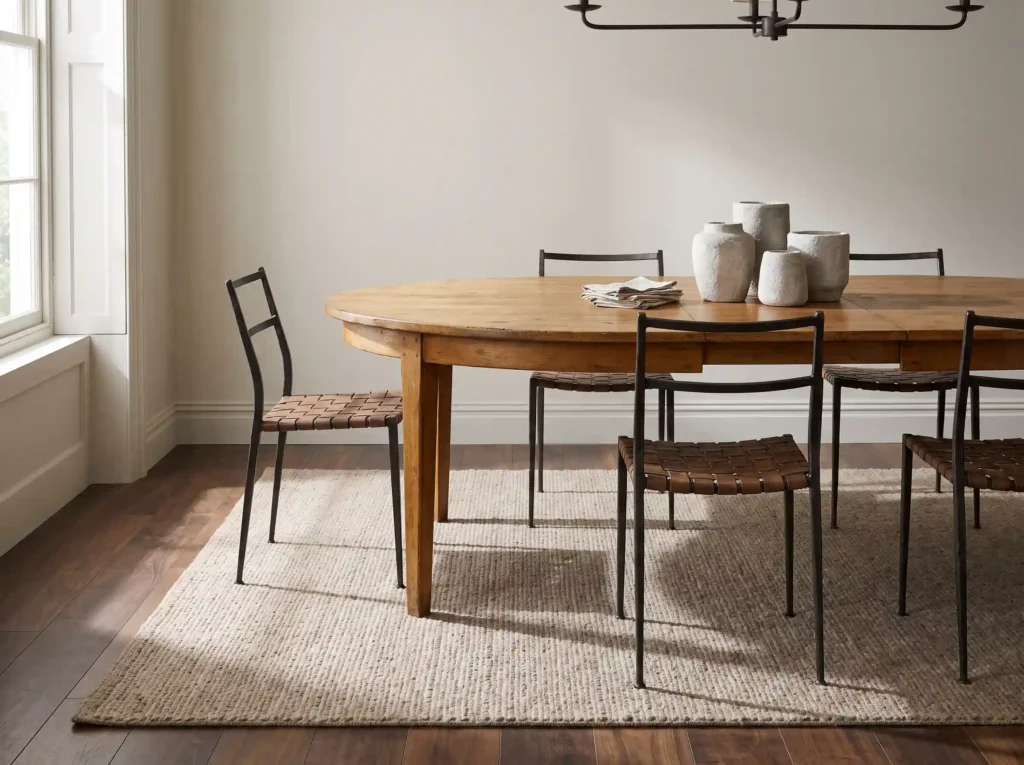
Your table and chair layout forms the center of daily life in the room. Ditching matching sets allows you to introduce varied textures without sacrificing comfort.
What happens in real life? People often buy vintage chairs without measuring first, only to discover their legs bump uncomfortably against the table apron.
- Verify Seat Heights First: Standard dining seat heights must measure between 18 and 20 inches from the floor. Keep all seats level so guests sit at the exact same eye height.
- Unify Different Frames with Paint: If you collect disparate frames like spindle-backs and mid-century teak chairs, coat them in satin black or muted ivory. Single-color paint instantly bonds unmatched shapes.
- Install Identical Cushion Upholstery: Re-covering assorted chair pads with matching linen, cognac leather, or textured boucle ties varied wood frames together.
- Start with the Host Chairs: If a fully eclectic set feels intimidating, place two matching vintage armchairs at the table ends. Run identical modern side chairs along the lengths.
- Cap the Variation at Three Styles: Mixing six different chair designs creates chaos. Restrict your arrangement to two or three distinct models to maintain visual rhythm.
How to Coordinate Multiple Wood Finishes Without Clashing
A collected dining space rarely relies on matching timber stains. It thrives on complementary wood finishes that look gathered across decades.
Match Wood Temperatures Before Mixing Grain Patterns
Different wood species can share a space, but their undertones must cooperate. Warm woods like cherry, mahogany, and warm walnut feature red, orange, or golden bases. White oak, ash, and cerused finishes lean cool or neutral.
What most people overlook is the clash of conflicting temperatures. Stick within one dominant color family so varied wood grains sit comfortably side by side.
Balance Wood Finishes Using the 60/30/10 Rule
Distribute timber finishes intentionally across the room:
- 60 Percent Dominant Tone: Dedicate this share to your largest surface, typically the hardwood flooring or a substantial dining tabletop.
- 30 Percent Secondary Tone: Bring in a contrasting wood via a credenza, wall shelving, or chair frames.
- 10 Percent Accent Tone: Reserve this for small items like decorative bowls, vintage cutting boards, or picture frames.
Break Up Competing Timber Surfaces with Metal and Stone
Never place clashing wood finishes directly against one another. Use painted finishes, natural stone, or black metal bases as visual spacers. Placing a neutral wool rug between a vintage oak table and a walnut floor prevents the surfaces from fighting.
Using Lighting, Textiles, and Storage to Connect Decades
Secondary architectural elements pull disparate decades into a cohesive environment. They soften hard edges and balance visual proportions.
Hang Sculptural Modern Pendants Over Antique Tables
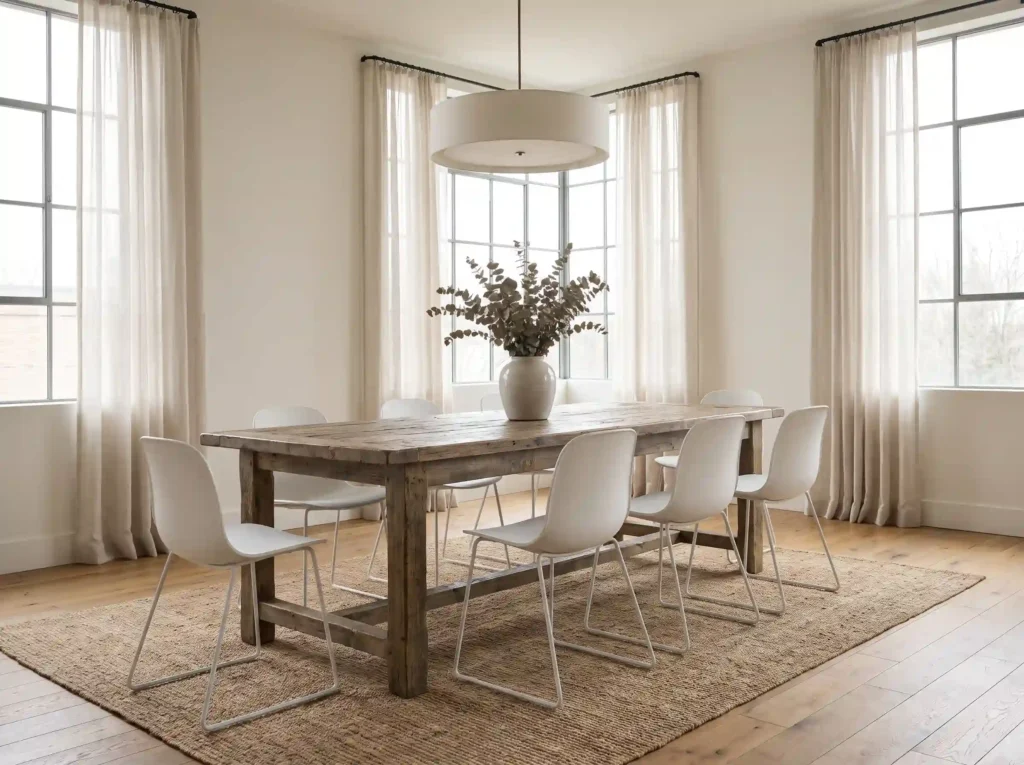
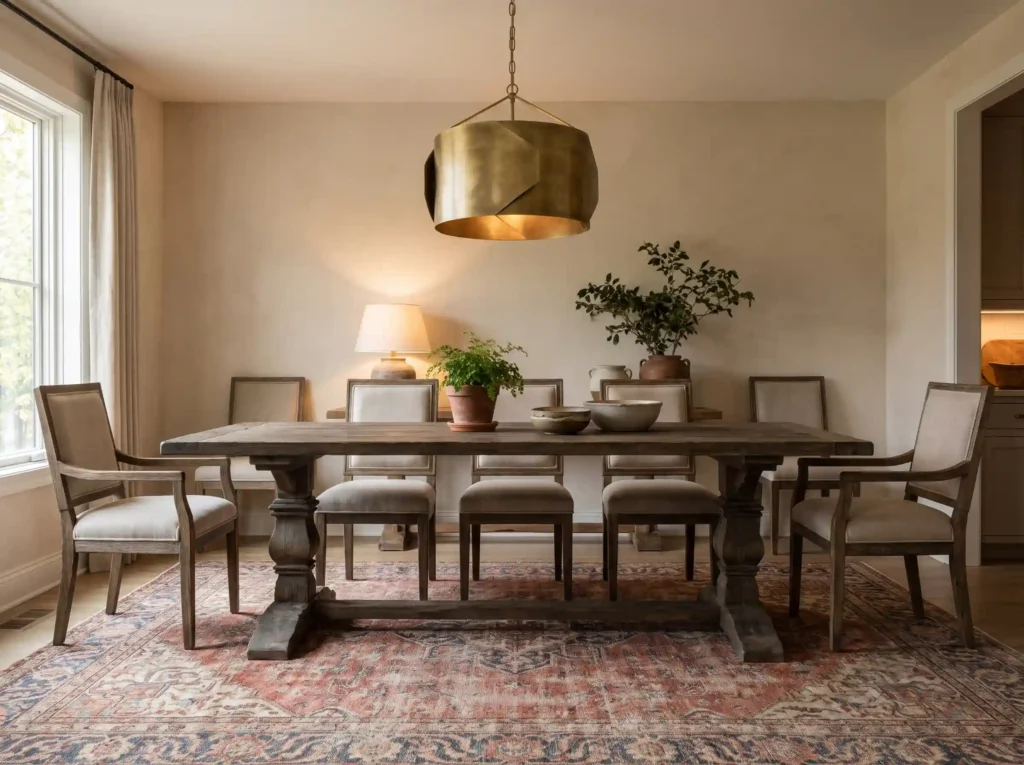
Lighting acts as functional sculpture. Suspending an angular, contemporary brass chandelier above a weathered French trestle table instantly freshens the room.
The inverse works just as well. An antique crystal fixture or iron lantern brings warmth and history above a minimalist dining set.
Define the Seating Footprint with Low-Pile Vintage Rugs
A worn Persian or Turkish Oushak rug softens sharp modern lines. The tight weave also allows dining chairs to slide out without catching on high pile.
Make sure the rug extends at least 24 inches beyond the edge of the dining table on all sides. This keeps chair legs sitting flat when guests stand up.
Decorate Traditional Buffets with Contemporary Art
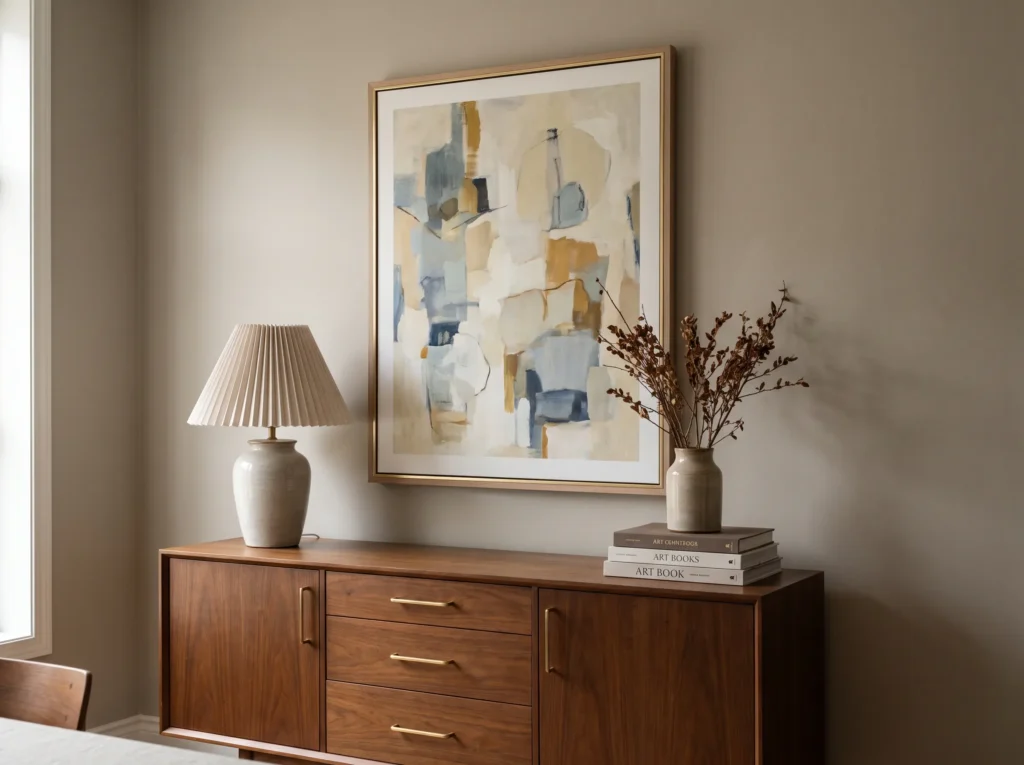
An antique sideboard or mid-century Danish credenza provides hidden storage while bringing age to plain walls. Keep the display modern using these placement rules:
- Match Wall Art to Credenza Scale: Choose an oversized mirror or abstract print measuring between two-thirds and three-quarters the width of the sideboard.
- Maintain Tight Hanging Heights: Hang framed artwork roughly 6 to 8 inches above the top of the credenza so the pieces form a single unit.
- Add Asymmetrical Styling: Place a contemporary ceramic lamp on one end and balance it with low art books and branches on the other.
Common Mistakes That Turn Curated Rooms into Cluttered Spaces
Curating a blended room requires restraint. Watch out for these frequent decorating missteps:
- The Antique Shop Effect: Filling every corner with historic pieces makes the home feel dated. Balance older furniture with fresh contemporary lighting or abstract prints.
- Ignoring Negative Space: Packing every flat surface with decor creates clutter. Give each unique item empty space around it so the craftsmanship stands out.
- Mismatched Furniture Visual Weight: Do not pair an enormous Victorian cabinet with spindly wire dining chairs. Balance the physical volume of pieces across the entire room.
- Rushing the Hunting Process: True character takes time. Avoid buying mass-produced faux-vintage pieces in a rush; wait for quality items that carry real stories.
Frequently Asked Questions About Mixing Furniture Eras
Can I mix more than two design periods in one dining room?
Yes, but keep your major furniture restricted to two contrasting eras, such as mid-century and traditional. Introduce a third era only through small accents like wall sconces, tableware, or ceramics.
How do I make vintage furniture feel clean and modern?
Swap out tarnished, dated hardware for matte black or brushed brass pulls. You can also re-cover tired chair cushions in crisp neutral performance fabrics or hang bold modern art directly above older cabinets.
What is the 80/20 design rule for blending furniture styles?
The 80/20 design ratio anchors your space by letting one dominant aesthetic occupy roughly 80 percent of the room. The remaining 20 percent is reserved for contrasting statement pieces, creating intentional visual tension without making the space feel chaotic.
How do you coordinate different wood finishes without clashing?
Coordinate finishes by matching wood undertone temperatures—warm versus cool—before worrying about grain patterns. Then distribute your wood tones using the 60/30/10 ratio across your flooring, larger storage pieces, and small accent accessories.
How far should a rug extend past a dining table?
A dining room rug should extend at least 24 inches beyond the edge of the table on all sides. This clearance ensures that chair legs remain flat on the rug surface even when guests pull chairs out to sit down or stand up.
How high should artwork hang above a dining room credenza?
Hang framed artwork or mirrors roughly 6 to 8 inches above the surface of your credenza. This tight spacing ensures the furniture and wall decor visually read as a cohesive single unit rather than disconnected pieces.
Building a Dining Space That Ages Gracefully
Mixing vintage and modern design creates a warm, layered gathering space that never feels dated. By anchoring the room with a dominant style, matching wood temperatures, and using lighting as a bridge, you build a dining room full of staying power and genuine charm.
Sources
- Summerhouse Tampa Furniture – Blending Styles and Eras
- Luke’s Furniture Company – Mixing Modern and Traditional Decor
- Style at Home – Design Principles for Eclectic Spaces
- Vintage Shopper – Balancing Vintage Accents with Contemporary Furniture
- Engel & Völkers – How to Mix Modern and Vintage Interior Design
- Room Concepts – Combining Furniture Styles and Color Palettes
- Homestyler – Contrast Techniques in Interior Styling
- Gusj – How to Mix and Match Dining Chairs
- Style by Emily Henderson – Rules for Mixing Wood Tones and Chairs
- Apartment Therapy – Proportions and Mistakes When Mixing Vintage and Modern
