
Buying a complete matching set straight off a showroom floor is the fastest way to build a sterile space. Mixing older, character-rich furniture with contemporary silhouettes solves that problem immediately. It gives a living room depth, warmth, and history.
Yet without a clear game plan, combining distinct centuries turns messy fast. A room quickly devolves into looking like a disorganized thrift shop or a dusty estate sale.
The goal is intentional contrast. When you anchor modern lines with storied materials, the two styles highlight each other instead of competing for attention.
Why Blending Different Eras Keeps a Living Room Interesting
All-modern rooms often feel cold. Everything has crisp edges, flat finishes, and uniform factory surfaces. There is no friction.
On the other hand, decorating purely with historic pieces turns a home into a period set piece. Nobody wants to live in an antique parlor where every surface feels fragile.
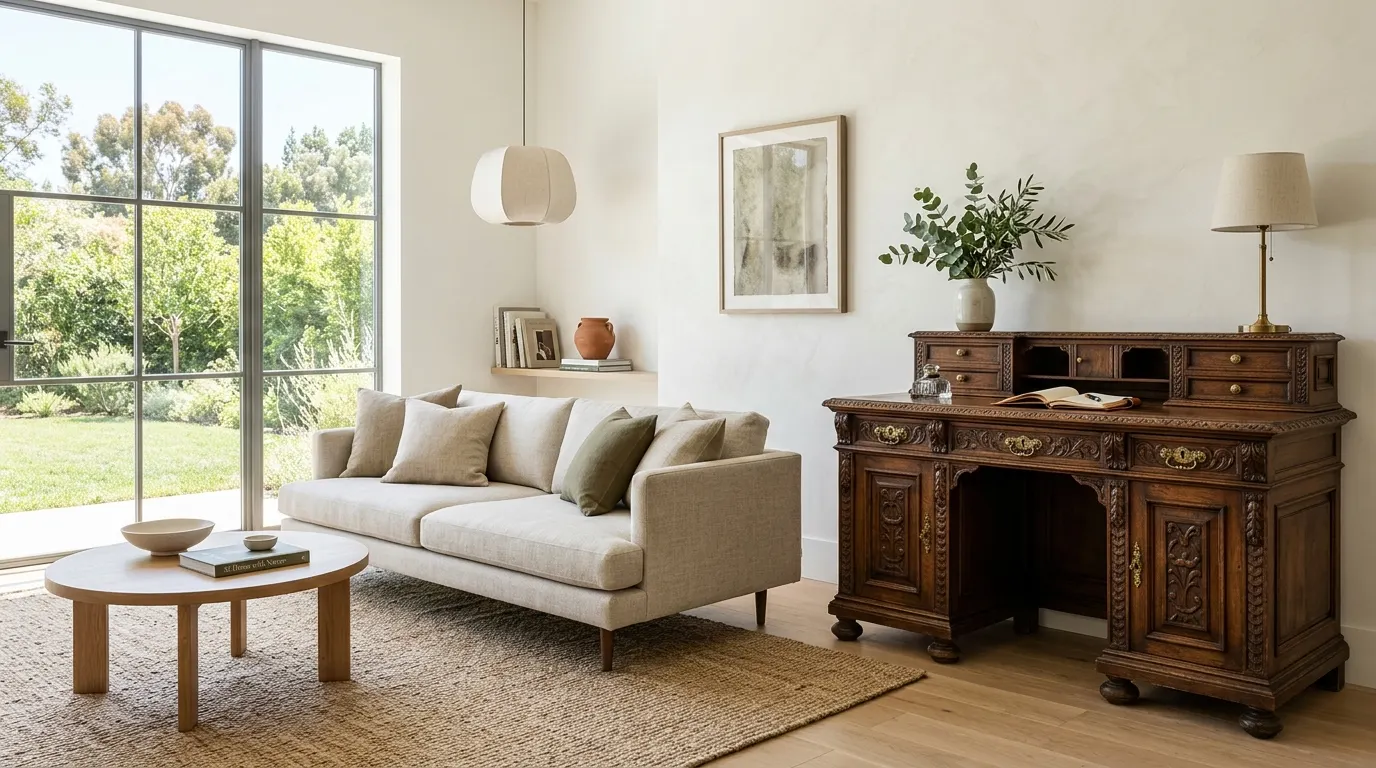
The magic happens in the tension between opposites. An ornate wood desk brings patina and craftsmanship that today’s flat-pack furniture cannot match. Meanwhile, a streamlined modern couch grounds the space firmly in the present.
What usually happens in real life? Visitors do not notice individual decades. They simply notice that the room feels collected, lived in, and layered.
Using the 80/20 Rule to Balance Old and New Furniture
Why do so many mixed spaces look confused?
Usually, it happens because the homeowner attempted a 50/50 split. Splitting two opposing styles down the middle forces the eyes to jump back and forth without resting.
Instead, pick one era to run the room and let the other play a supporting role. The 80/20 proportion gives you an automatic baseline.
Setting an 80-Percent Base with Modern Basics
For most households, building an 80-percent modern foundation is the most practical path forward. Everyday comfort matters.
Devote your primary budget to high-traffic seating, like a deep-seated modern sofa or a low-profile media console. Clean upholstery and simple architectural lines create quiet visual ground. That quiet backdrop allows older accent items to stand out as genuine focal points.
If you live in a historic home with ornate plaster moldings, you can flip the formula. Let the vintage architecture and heirloom cabinets dominate, then introduce thin metal tables and modern track lighting to cut through the visual heaviness.
Using the 20-Percent Accent Share for Antique Highlights
Reserve the remaining 20 percent of your space for high-character vintage accents. These are your conversation starters.
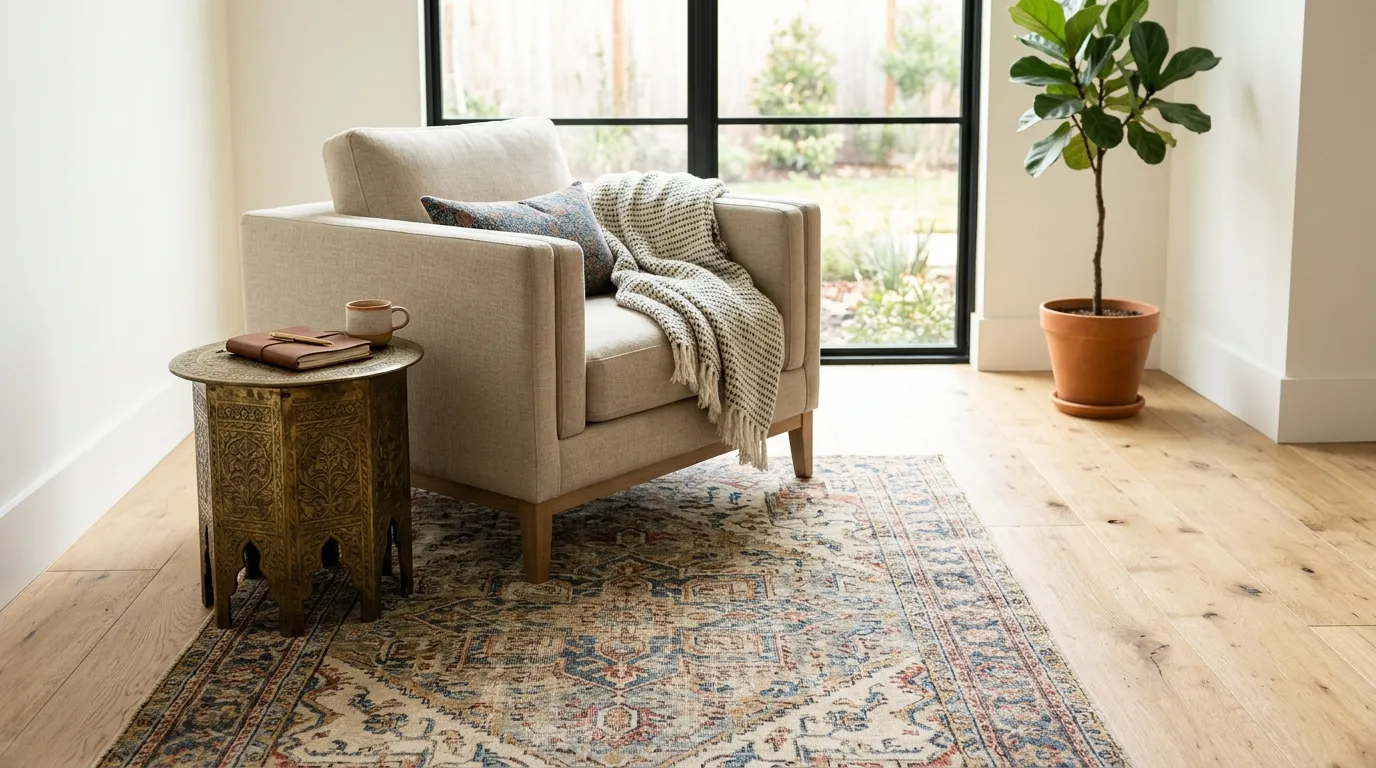
- Carved side tables: Slide an antique brass or turned-wood table next to a boxy, modern sectional.
- Traditional rugs: Lay a distressed Persian or Oushak rug over wide-plank floors to soften geometric seating.
- Statement lighting: Hang a vintage crystal chandelier or place a 1960s brass floor lamp near minimalist shelving.
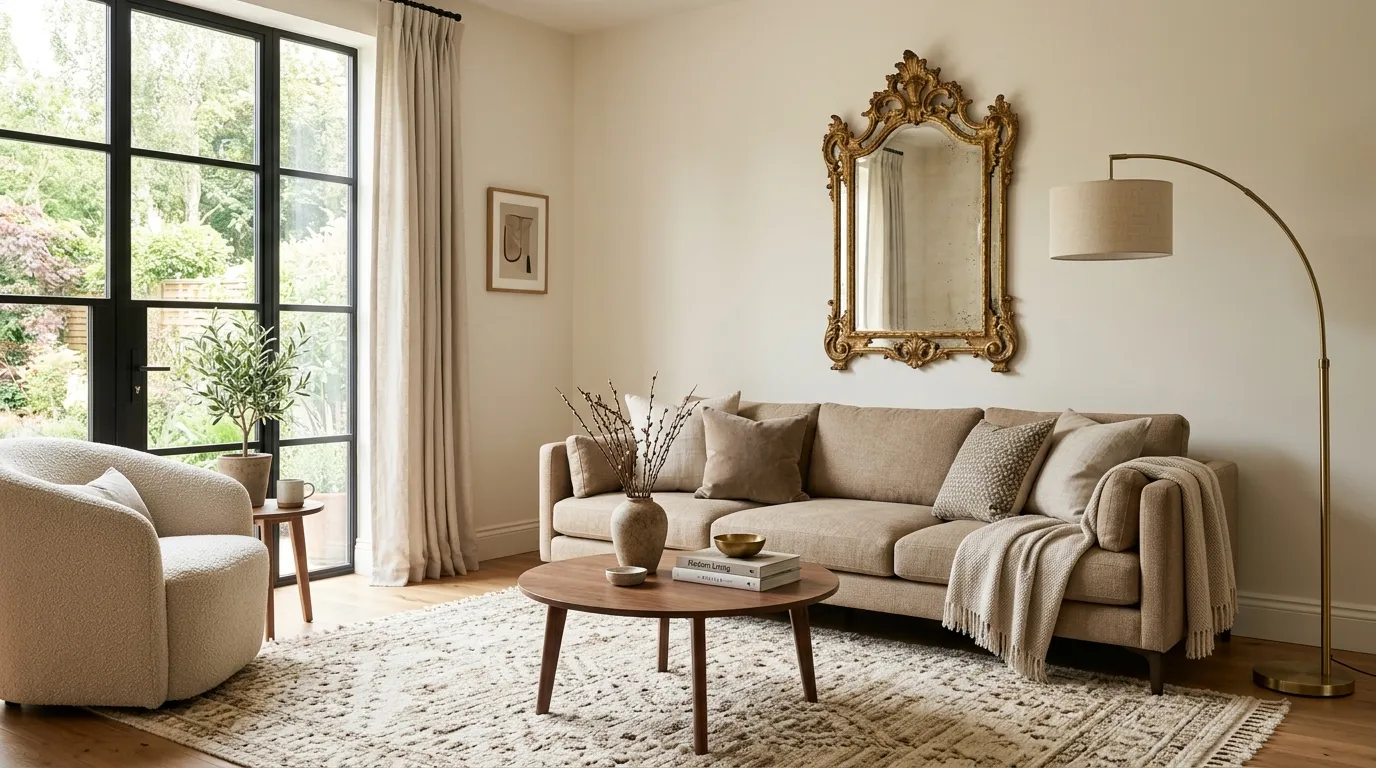
- Layered art and mirrors: Lean a heavy, gilded antique mirror against a flat drywall surface beside a modern armchair.
Techniques for Connecting Pieces Across Different Decades
You cannot simply throw random pieces into a room and assume the 80/20 ratio will save you. You need shared visual cues to tie everything together.
Matching Wood Undertones Instead of Exact Finishes
One thing most people overlook is wood temperature. You do not need matching oak everywhere. In fact, matching every piece of wood makes a room look flat.
You do, however, need compatible undertones. Look closely at your wood finishes in natural daylight:
- Warm undertones: Walnut, cherry, mahogany, and honey oak lean golden, red, or amber.
- Cool undertones: Ash, bleached oak, driftwood, and weathered gray wood sit on the cooler side of the spectrum.
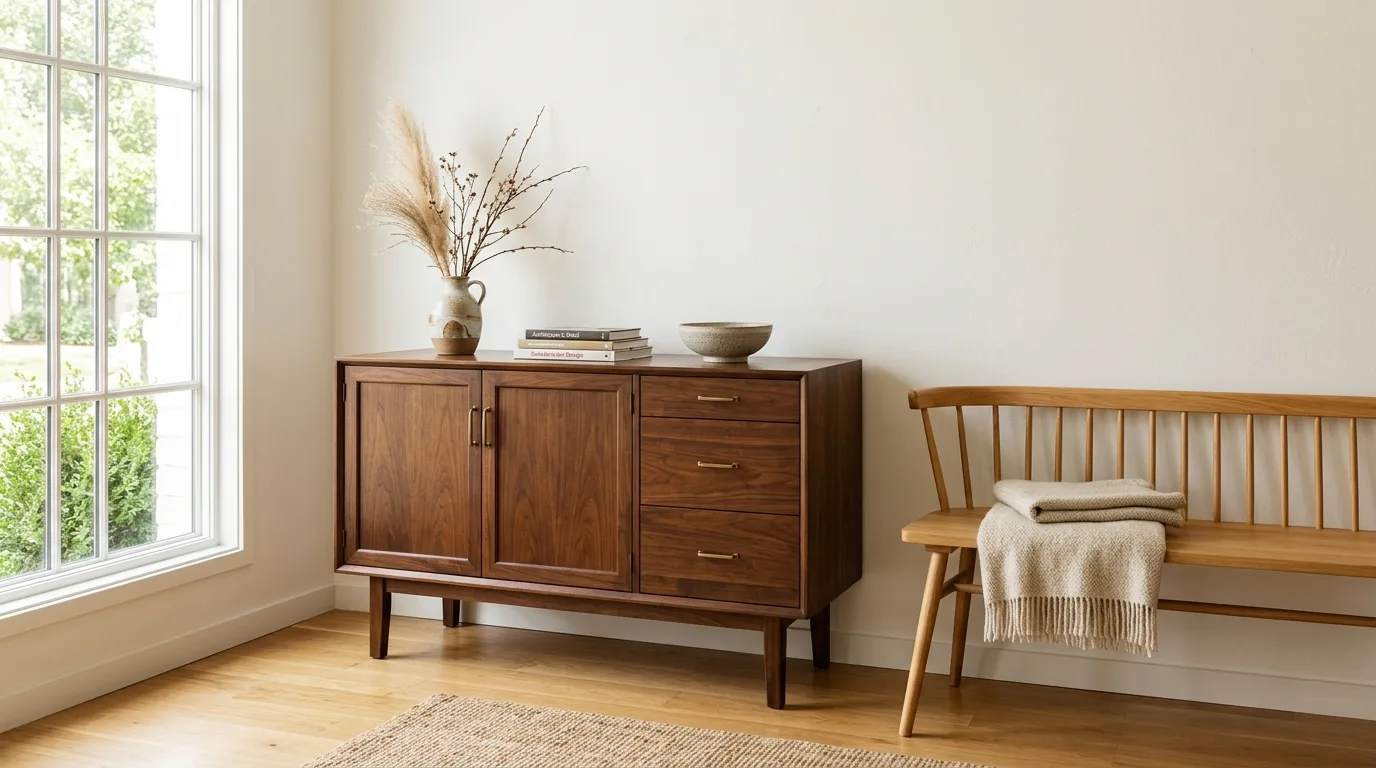
Keep your primary wood pieces within the same temperature family. If you mix a dark walnut credenza with a pale blonde oak bench, make sure both lean warm. That common undertone bridges centuries effortlessly.
Balancing Bulky Antiques with Low-Profile Modern Silhouettes
Scale can make or break a mixed layout.
Older case goods and armoires tend to be tall, dark, and visually heavy. Modern seating tends to sit low to the ground with exposed legs. If you cluster all your heavy antique pieces along one wall, the entire room feels lopsided.
Scatter visual weight evenly across your floor plan. If you place a bulky vintage chest on the left side of the room, balance it on the right with a substantial contemporary sofa. Keep sightlines open by pairing dense storage cabinets with leggy, open-frame coffee tables.
Watch out for seat heights, too. Placing a low, 16-inch modern lounge chair next to a towering 30-inch antique end table looks awkward and functions poorly.
Bridging Periods with Neutral Backdrops and Shared Textures
Color acts as an immediate peacemaker between competing eras. A calm backdrop of warm white or soft greige allows wildly different shapes to sit comfortably side by side.
Repeat tactile materials across both modern and antique pieces. If your vintage dining chairs feature rich velvet, toss a velvet throw pillow onto your contemporary couch. If you have matte brass pulls on an antique highboy, pick a modern floor lamp with brushed brass hardware. Shared materials tell the eye that these pieces belong in the same house.
Anchoring Antique Corners with Modern Art and Fixtures
Lighting and wall art function as modern equalizers. They signal that older furnishings are an intentional design statement rather than inherited clutter.
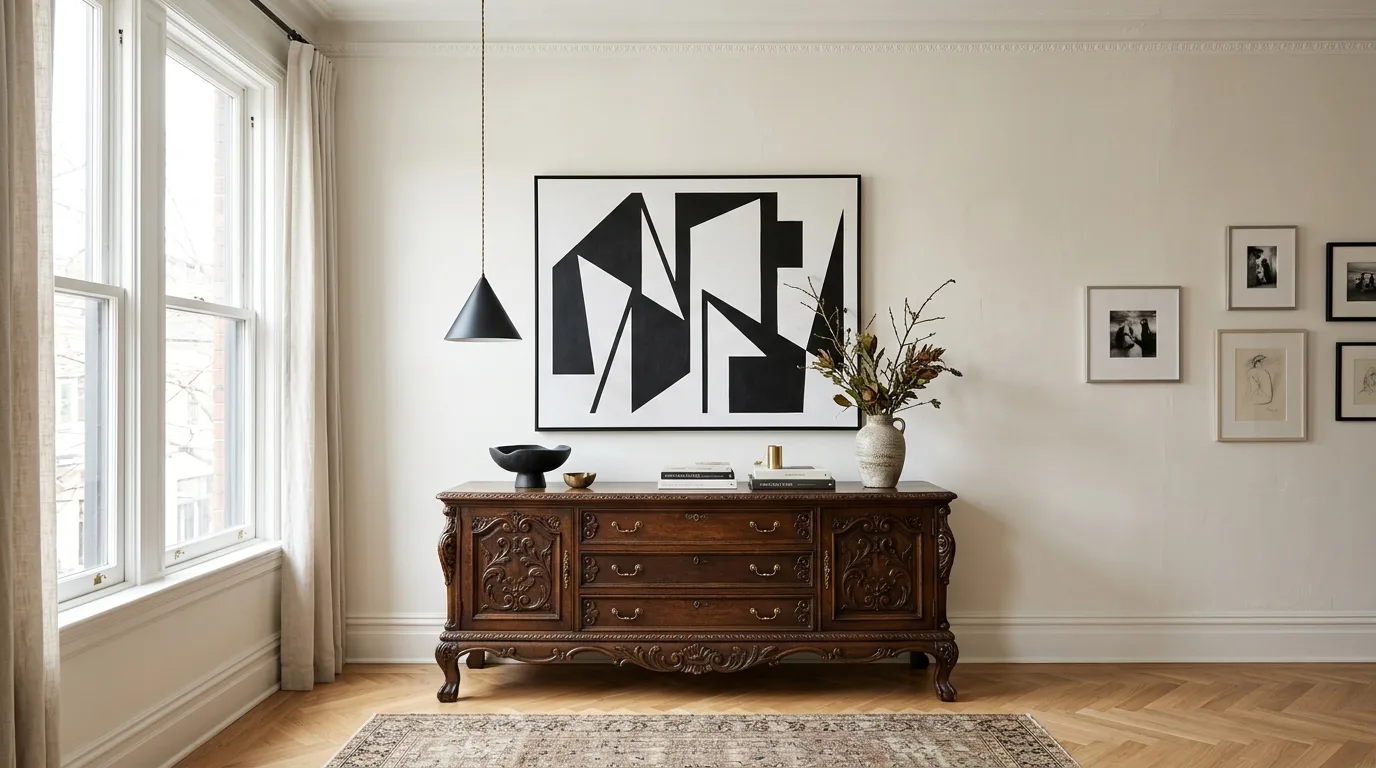
Try hanging an oversized, minimalist abstract canvas directly above an ornate Victorian sideboard. The stark simplicity of the artwork immediately modernizes the carved woodwork below it.
The same logic applies to overhead fixtures. Swapping out a dated brass fixture for a clean, matte-black architectural pendant pulls an antique dining set straight into the current century.
Styling Mistakes That Make Mixed Rooms Feel Chaotic
Knowing what to leave out is just as valuable as knowing what to buy. Avoid these common traps:
- Accumulating small clutter: Buying dozens of tiny thrift-store trinkets creates a dusty flea-market look. Commit to fewer, larger vintage statement pieces with real presence.
- Keeping broken or dingy upholstery: Worn-out, musty fabric placed on modern flooring looks neglected rather than charming. Reupholster antique chair frames in fresh linen, wool, or leather.
- Mismatched physical scale: A petite antique tea table looks comical next to an oversized modern sectional. Always measure heights and seat depths before purchasing.
- Sticking to one single retro decade: Buying only mid-century items turns your home into a 1960s time capsule. Mix multiple periods, like pairing a 1970s chrome lamp with an 1800s Swedish commode.
A Practical Order of Operations for Furnishing Your Room
Building a cohesive room takes time. When you are ready to style your space, follow this simple sequence:
- Prepare the envelope: Paint walls a warm neutral shade and put down a sizable area rug to establish your seating border.
- Place your main modern seating: Invest in your core everyday sofa first. Keep the silhouette simple, comfortable, and tailored.
- Add one hero vintage piece: Bring in your primary antique focal point, whether that is an ornate mirror, a flat-weave runner, or a carved console.
- Balance with accent furniture: Add secondary armchairs, a coffee table, and side tables, balancing heavy boxy shapes with airy metal frames.
- Finish with lighting and art: Install modern light fixtures and hang contemporary prints to tie both aesthetics together cleanly.
Living with a Space That Changes Over Time
A layered room is never truly finished in a single weekend. The best interiors evolve as you discover pieces with genuine history during your travels, at local estate sales, or through family hand-downs.
Focus on buying items you genuinely admire rather than chasing rigid trends. When you pay attention to proportions, wood warmth, and balanced placement, items from different centuries will always feel right at home together.
