
Modern kitchens look stunning in showroom photos. In daily life, all that polished quartz, glossy tile, and stainless steel can feel uncomfortably cold. When hard surfaces cover every square inch, the room starts feeling more like an operating room than a cozy gathering spot. You do not need to tear out your cabinets or rip up your floor to fix this. With the right bulb temperatures, organic materials, tactile fabrics, and thoughtful styling, you can give a cold space genuine warmth. Here is how to make your kitchen feel lived-in, welcoming, and deeply comfortable.
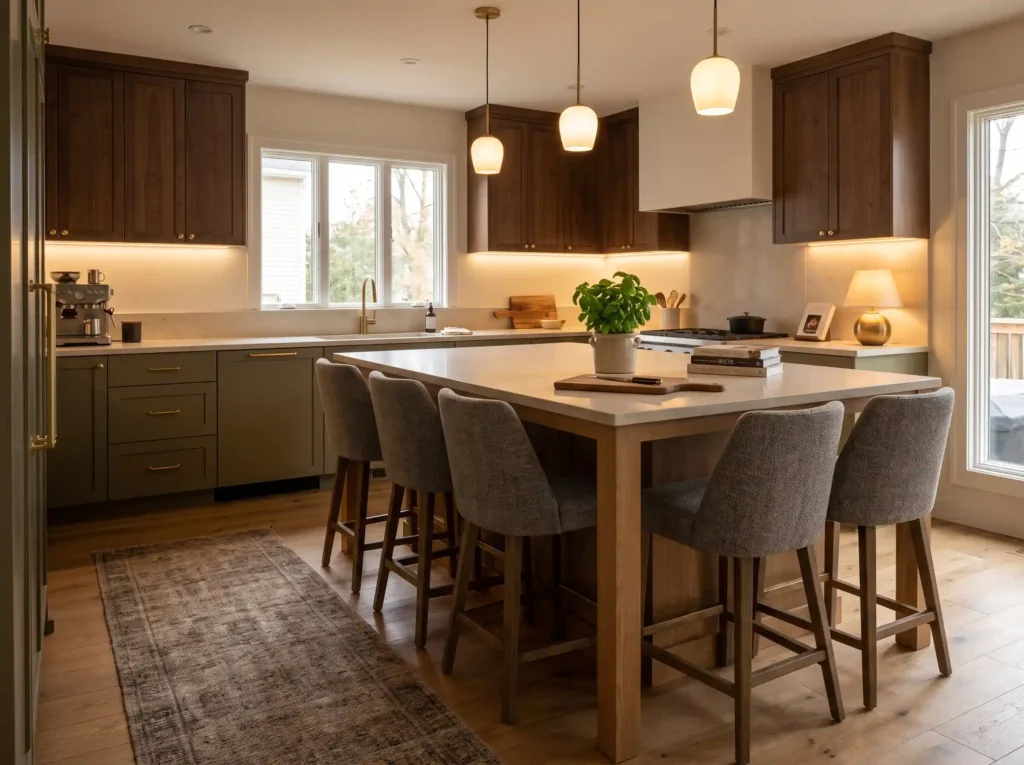
Fix Harsh Lighting and Banish Clinical Glare
Lighting sets the emotional tone of a kitchen faster than any paint color or countertop material. If you only turn on recessed ceiling cans, you flood the room with flat, blinding glare that flattens every texture.
Switch to Warm Bulb Temperatures
Bulbs rated between 4000K and 5000K emit a sterile blue-white glow. That color temperature belongs in a commercial laboratory, not your home. Swap them out for warm-white bulbs between 2700K and 3000K. A 3000K bulb strikes the sweet spot. It delivers crisp clarity for knife work while keeping the space inviting. Check the package for a Color Rendering Index (CRI) rating of 90 or higher. High CRI bulbs reveal the authentic color of fresh food, painted cabinets, and natural wood grain.
Layer Your Light Sources Across the Room
Comfortable rooms never rely on a single overhead circuit. Create visual depth by scattering light sources at different heights:
- Under-Cabinet Strip Lights: Hidden LED strips brighten dark counter corners and remove harsh shadows directly over your main cutting boards.
- Pendant Fixtures: Hang low pendants with linen, woven rattan, or reeded glass shades over the island to anchor the prep area.
- A Small Counter Lamp: Tuck a tiny plug-in or rechargeable lamp with an opaque pleated shade into a quiet corner.
- Dimmer Switches: Wire dimmers to every switch so you can dial down brightness when cooking wraps up and dining begins.
That tiny counter lamp will change how your kitchen feels after sundown.
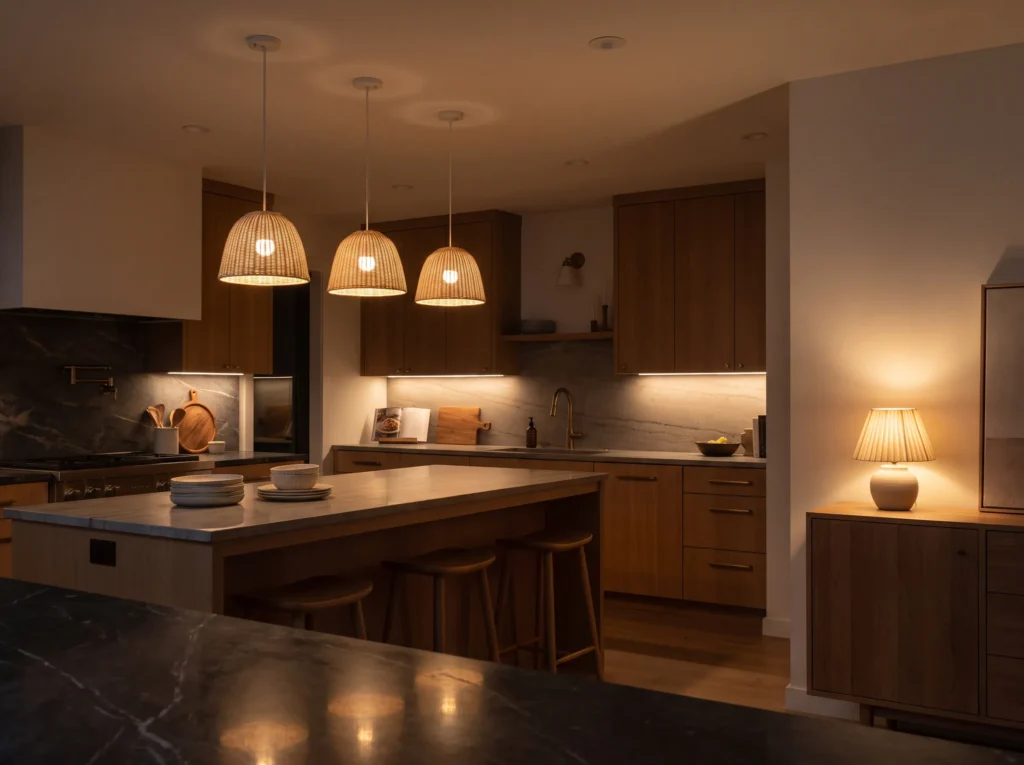
Introduce Natural Wood and Tactile Materials
Most sterile kitchens suffer from too many non-porous, man-made materials. Engineered quartz, lacquered doors, and stainless appliances reflect cold light. Timber restores balance immediately.
Bring in Visible Grain and Warm Timber
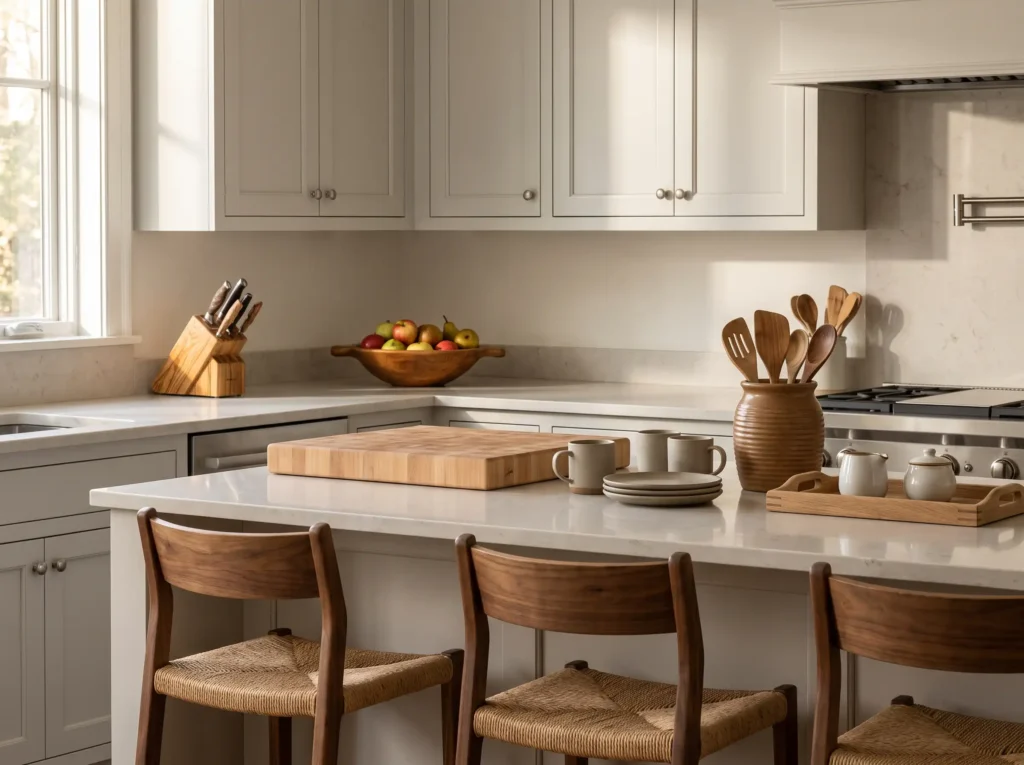
Wood introduces organic movement that manufactured slabs cannot replicate. If your cabinets are painted white, gray, or dark navy, add raw or oiled wood accents wherever your eyes land daily. You can swap cold metal stools for white oak or walnut seating. Hang a floating shelf above the coffee bar, or install a thick butcher-block section along the island perimeter. Smaller touches help just as much. Keep a heavy end-grain butcher block on the counter, use an olivewood knife block, or set out a hand-turned fruit bowl.
Break Up Expanses of Polished Stone
Polished granite and quartz are naturally cold to the touch. Break up long runs of stone by grouping matte, earthy ceramics together. Store your wooden spoons in a ribbed clay crock. Set your daily salt and pepper grinders onto an untreated wood platter. These subtle textural changes absorb light and invite your hands to touch real surfaces.
Dampen Echoes with Soft Kitchen Textiles
Here is something most people overlook: cold kitchens sound cold. Tile, quartz, glass, and metal bounce sound waves straight back into the room. Every clattering plate and running faucet echoes, creating subtle sensory tension. Textiles quietly solve that problem.
Anchor the Floor with a Flat-Weave Runner
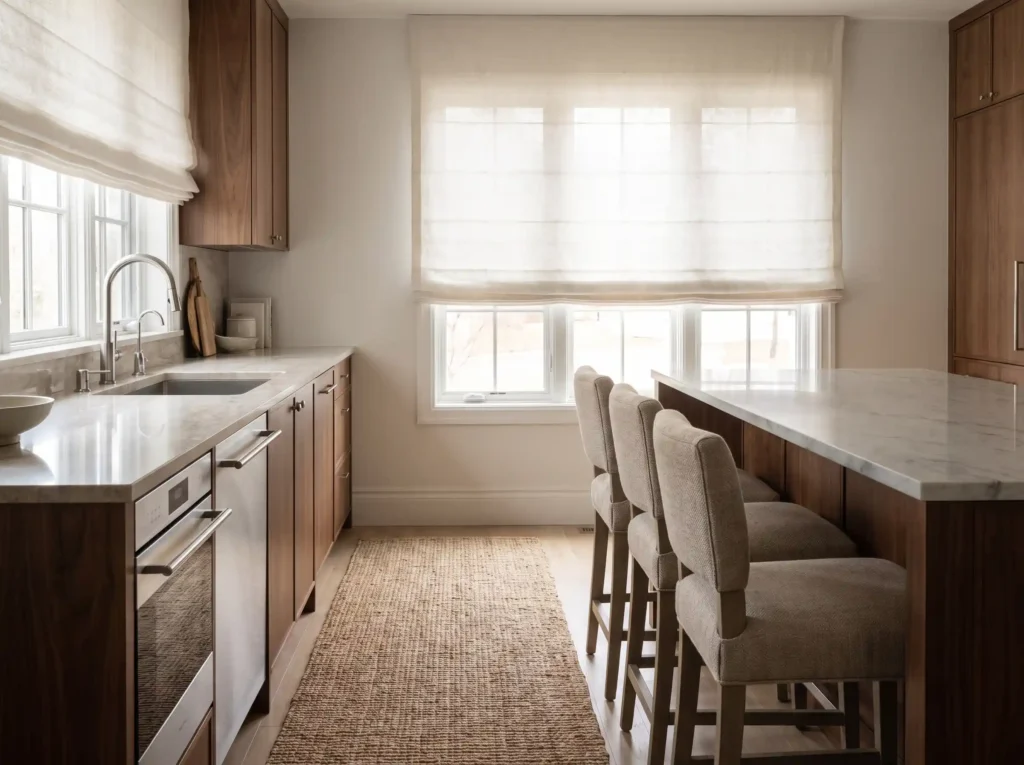
A vast stretch of bare tile makes any kitchen feel drafty. Lay a narrow runner rug between your sink counter and the kitchen island. The fabric adds immediate pattern, absorbs footsteps, and provides cushion while you wash dishes. In cooking zones, choose a low-pile washable rug or a tightly woven wool flat-weave. Wool naturally contains lanolin, which helps repel oil and accidental sauce drops.
Frame Kitchen Windows with Fabric Roman Shades
Skip sterile metal mini-blinds or plastic faux-wood slats. Dress bare casements in tailored fabric Roman shades crafted from washed linen or heavy cotton. They filter midday glare into a mellow amber glow and break up rigid window trim.
Choose Padded Counter Stools
Industrial metal barstools look striking in catalog spreads, but nobody wants to sit on them for more than ten minutes. Invest in island stools with padded seats and supportive backrests. Look for performance fabrics like Crypton or FibreGuard that repel spills with a damp cloth, or choose rich saddle leather. Leather ages naturally, gaining pleasant patina as your family uses it.
Swap Cold Chrome for Warm Living Metals
Stainless appliances are practical kitchen workhorses, but pairing them with polished chrome faucets and shiny nickel handles creates a clinical environment. Warm metal hardware bridges the gap and brings instant character.
- Unlacquered Brass: Raw brass reacts with air and touch, developing a rich antique patina that looks collected over decades.
- Aged Bronze: Matte bronze handles offer deep visual contrast against pale cupboards without the harsh graphic starkness of flat black iron.
- Hammered Copper: Hang copper saucepans on a rail or choose a brushed copper sink mixer to reflect rich golden tones.
Rethink Paint with Creamy, Earth-Inspired Tones
Brilliant white paint with cool blue undertones bounces harsh daylight and sharpens dark shadows. It is the fastest way to turn a sunny room into an arctic box.
Opt for Soft Whites and Warm Greiges
If you love light cabinets or bright walls, swap stark white for creamy off-white paint. Colors like Benjamin Moore Simply White or Swiss Coffee contain yellow and warm undertones that preserve brightness while banishing the chill. If you want slightly deeper neutral cabinetry, consider warm greiges such as Accessible Beige, Pale Oak, or Revere Pewter. Paint large sample boards first. Move them around your kitchen to see how natural morning sun and evening lamps shift their undertones.
Layer Muted Greens and Terracotta
Nature offers the easiest palette for creating calm. Paint a lower island run in soft sage or muted olive. Both greens harmonize effortlessly with warm wood and brass fixtures. You can also introduce warmth through terracotta floor tiles, handcrafted zellige backsplashes, or raw earthenware pots along a sunny window ledge.
Style Countertops with Daily Cooking Rituals
When homeowners realize their kitchen feels sterile, they often panic and purchase random decorative knick-knacks.
What usually happens in real life? Those items collect cooking grease, clutter your work zones, and make meal prep frustrating. Warm styling should always honor daily cooking.
Group Essentials Using the Rule of Three
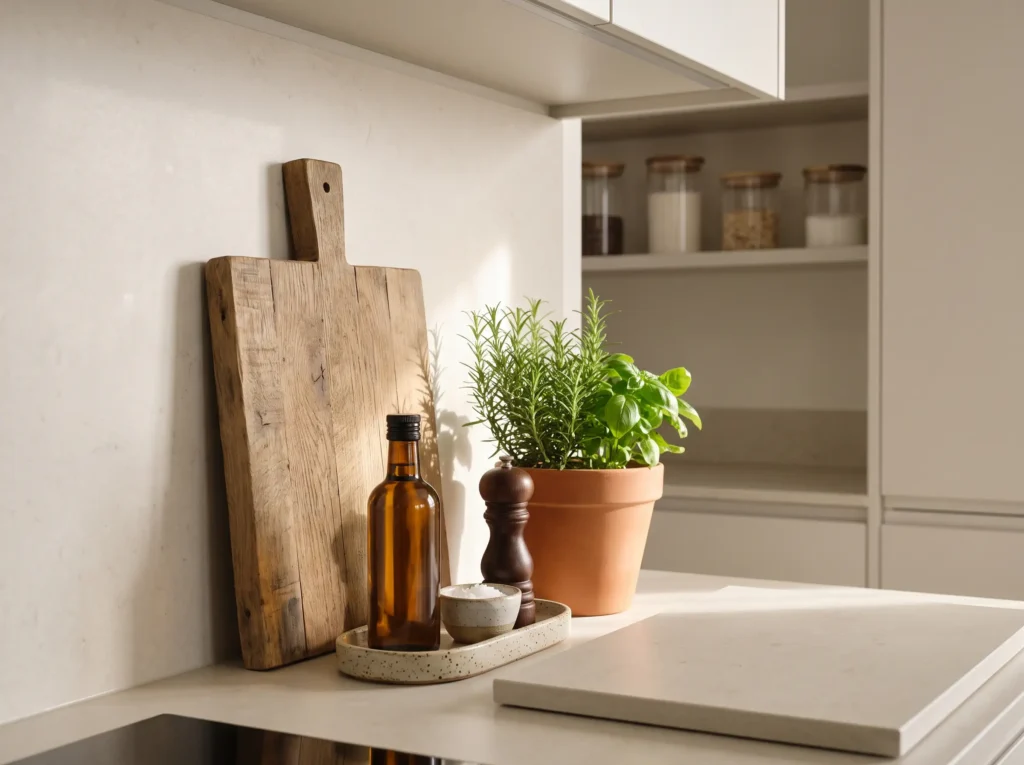
Keep main prep counters clear, but choose two corners to arrange functional, appealing vignettes. Group three items of varying heights and textures together:
- Lean a Board: Place a thick wooden breadboard or a small framed oil painting against your backsplash for immediate vertical height.
- Cluster Daily Ingredients: Set a stoneware olive oil bottle, a pinch pot of flaky sea salt, and a pepper mill on a small tray.
- Add Fresh Botanicals: Place a small terracotta pot of living rosemary or sweet basil right where the morning sun lands.
Hide Packaging in Appliance Garages and Glass Jars
Cardboard cereal boxes, colorful plastic tubs, and countertop blenders produce visual friction that stresses the eye. Tuck small appliances into a dedicated appliance garage or deep cabinet when you finish breakfast. Decant flour, oats, and coffee beans into clean glass jars fitted with wooden lids. Uniform pantry storage keeps visible food supplies looking organized and serene.
Avoid These Common Cozy Kitchen Mistakes and Safety Hazards
Making a kitchen feel welcoming should never compromise basic household safety or everyday sanitation. Keep these critical precautions in mind as you decorate:
Keep Clearances Around the Cooktop
Keep a three-foot safety buffer around your burners and range completely clear of flammable decor. Never lean wooden cutting boards directly beside active gas burners. Keep fabric curtains and trailing tea towels far away from hot grates.
Prevent Grease Buildup on Fabrics
Airborne cooking oils cling to porous textures. Avoid heavy, dry-clean-only velvet drapery or plush rugs near the stove. Clean your range hood baffle filters every month, and wash fabric shades and runner rugs regularly to keep grease from settling.
Secure Floor Rugs with Non-Slip Pads
Never toss a loose runner over smooth hardwood or glossy tile. Carrying boiling pasta water across an unsecured rug creates a severe slip hazard. Always tuck a dedicated rubber non-slip pad beneath the runner to anchor it firmly to the floor.
Stick to Consistent Bulb Temperatures
Do not mix 5000K daylight bulbs in ceiling cans with 2700K bulbs in your island pendants. The competing spectrums fight each other, making the warm lights look muddy yellow and the cool lights look sickly blue. Unify every light fixture in the room within the 2700K to 3000K range for a cohesive, peaceful atmosphere.
From Showroom Finish to True Hospitality
A functional kitchen must handle messy meal prep, but it should also welcome your family to gather and linger. Transforming a sterile kitchen is not about hiding modern convenience. It is about replacing clinical blue glare with honeyed light, softening hard stone with natural timber, and celebrating the rhythm of home cooking.
Sources
- House Digest: Kitchen Warmth and Styling Guides
- Houzz: Kitchen Runner Rugs, Roman Shades, and Warming Up Sterile Spaces
- Architectural Digest: Avoid the Sterile Look with Layered Kitchen Design
- Homes & Gardens: Open Shelving and Kitchen Styling Tips
- Staci Edwards Design: Softening Hard Kitchen Surfaces with Textiles
- Roccia: Transforming Clinical Kitchens with Warm Textures
- Wadsworth Design: Balancing Kitchen Lighting, Finishes, and Color
- Wellborn Forest: Natural Wood and Organic Touches in Kitchens
Frequently Asked Questions
What is the ideal light bulb color temperature for a cozy kitchen?
Warm-white bulbs rated between 2700K and 3000K provide the most inviting atmosphere without sacrificing visibility. A 3000K bulb hits the ideal balance by offering crisp clarity for cutting and cooking tasks while avoiding the clinical blue glare of 4000K to 5000K commercial bulbs. For a cohesive look, ensure all ceiling cans, pendants, and accent lights share this same temperature range.
Why is the Color Rendering Index (CRI) important when selecting kitchen lighting?
A Color Rendering Index rating of 90 or higher ensures your light bulbs accurately display colors as they appear under natural daylight. High CRI ratings bring out the authentic richness of fresh food, painted cabinetry, and natural wood grain rather than dulling or distorting them.
What type of runner rug is best for high-traffic kitchen floors?
A low-pile washable rug or a tightly woven wool flat-weave is the best choice between your sink counter and island. Wool naturally contains lanolin, which helps repel accidental oil splatters and sauces while providing sound-dampening cushion. Always place a dedicated rubber non-slip pad underneath to prevent hazardous shifting on slick tile or hardwood.
Which metal hardware finishes help warm up stainless steel appliances?
Warm living metals like unlacquered brass, aged bronze, and hammered copper bridge the gap between cool stainless appliances and the rest of the room. Unlacquered brass naturally develops an antique patina from touch and air, while aged bronze offers deep visual contrast against light cabinetry without the starkness of flat black iron.
What paint shades soften stark white kitchen cabinets?
Creamy off-white paints like Benjamin Moore Simply White or Swiss Coffee feature gentle yellow undertones that retain brightness while eliminating coldness. If you prefer deeper neutrals, warm greiges such as Accessible Beige, Pale Oak, and Revere Pewter add depth and pair seamlessly with warm timber and brass.
How do you decorate kitchen countertops without creating clutter?
Apply the rule of three in two quiet corners rather than spreading knick-knacks across active prep surfaces. Group three functional items of varied heights and textures—such as a leaning wooden breadboard, a small tray with daily olive oil and salt grinders, and a small potted botanical—while keeping the remaining work surfaces clear.
