
Designing a compact bedroom usually feels like a battle between two competing goals. You want clear floor space and bright airiness. Yet you also want the warm, cocooning feel that helps you sleep soundly.
Most people try to solve this by stripping the room bare. That approach backfires. It leaves the space feeling cold, sterile, and unfinished.
Expanding a small bedroom visually does not require knocking down dry wall. Small shifts in wall paint, light placement, and furniture profiles trick your eyes into seeing wider boundaries. You keep the warmth while gaining visual elbow room.
Choosing Wall Colors That Blur Boundaries and Reflect Light
Color alters how daylight travels across a room. The right paint shade turns narrow walls into an open canvas while keeping the atmosphere welcoming.
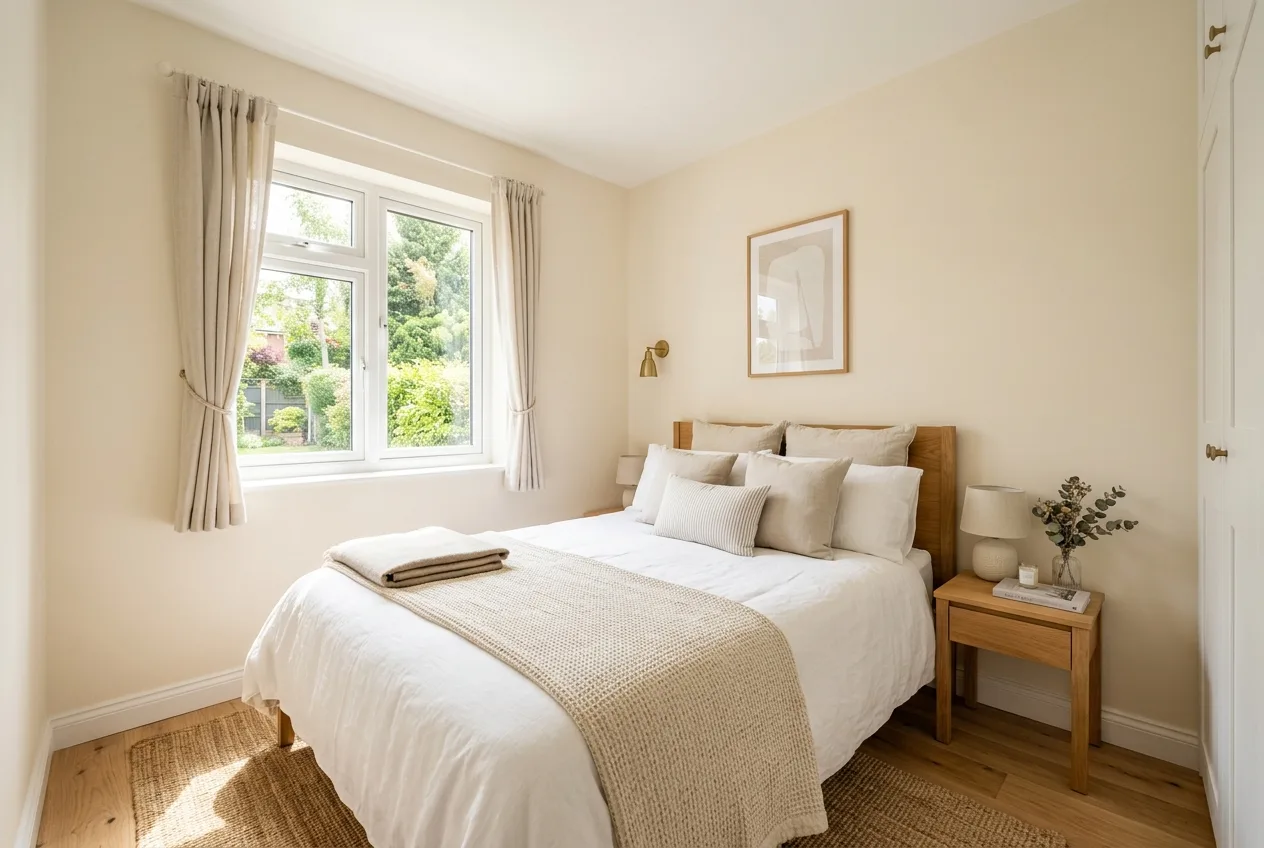
Using Warm Neutrals to Avoid the Sterile Hospital Room Look
Light paint bounces daylight into dim corners. Soft cream, warm beige, and pale warm gray reflect light across wall surfaces without harsh glare.
Here is what most people overlook. Pure stark white paint often looks gray and gloomy in rooms with low natural light. It lacks undertones to catch the sun.
To keep a small room inviting, choose shades with yellow, red, or peach undertones. Carry that shade across the walls and ceiling. Removing the hard line between wall and ceiling pulls the eye upward. The room feels taller right away.
Selecting Furniture That Keeps Floor Sightlines Open
Overly heavy furniture is the fastest way to ruin a compact bedroom layout. Large pieces absorb walking paths and block sightlines.
Why Raised Furniture Legs Make Tight Floors Feel Larger
Bulky furniture resting flat on the carpet blocks incoming light. It creates solid blocks that cut up your floor plan.
Swapping solid bases for pieces with slender exposed legs changes the entire space. When your eyes can see underneath a bed frame or nightstand, your brain registers that extra floor area.
Shadows clear out. Light passes across the flooring. The entire layout feels lighter, even if the furniture takes up the same physical footprint.
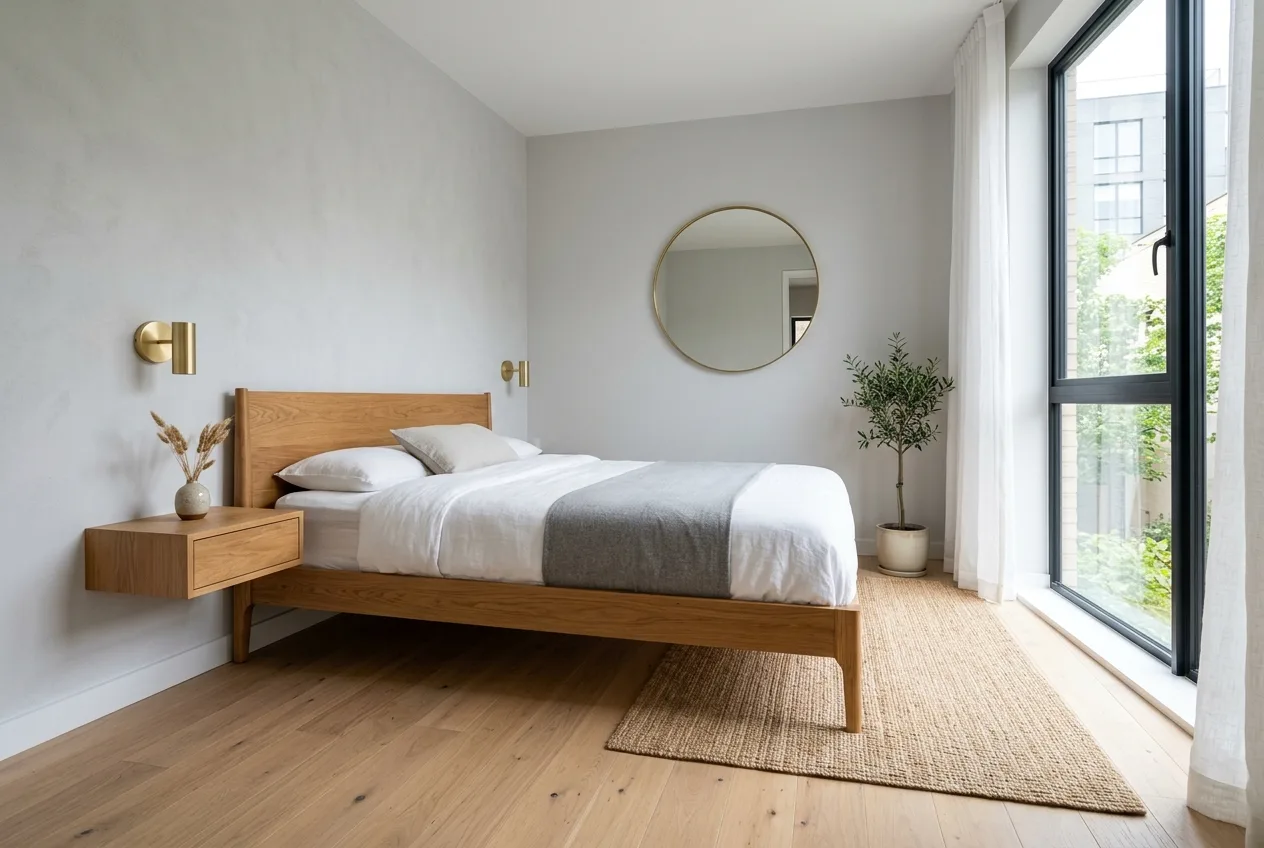
Mounting Shelves and Nightstands to Clear Walking Paths
When floor space runs out, move your storage up the walls.
Floating bedside tables, wall sconces, and high book ledges pull weight off the floor. They keep walkways clear while drawing attention toward ceiling height.
Dual-purpose pieces also prevent crowded layouts. A floating desk can serve as a nightstand. A storage bench at the foot of the bed hides winter blankets while giving you a place to sit.
Positioning Mirrors and Layered Bulbs to Add Depth
Proper lighting setups and reflective surfaces double the perceived depth of a small footprint while setting a relaxing mood.
Bouncing Sunlight Across Dark Corners with Strategic Mirrors
Mirrors act like extra windows in small rooms. They bounce daylight deep into shadowed spots and create the illusion of extended wall space.
Hang a large mirror directly across from a window, or along an adjacent wall. It catches the outdoor view and reflects natural light back into the room.
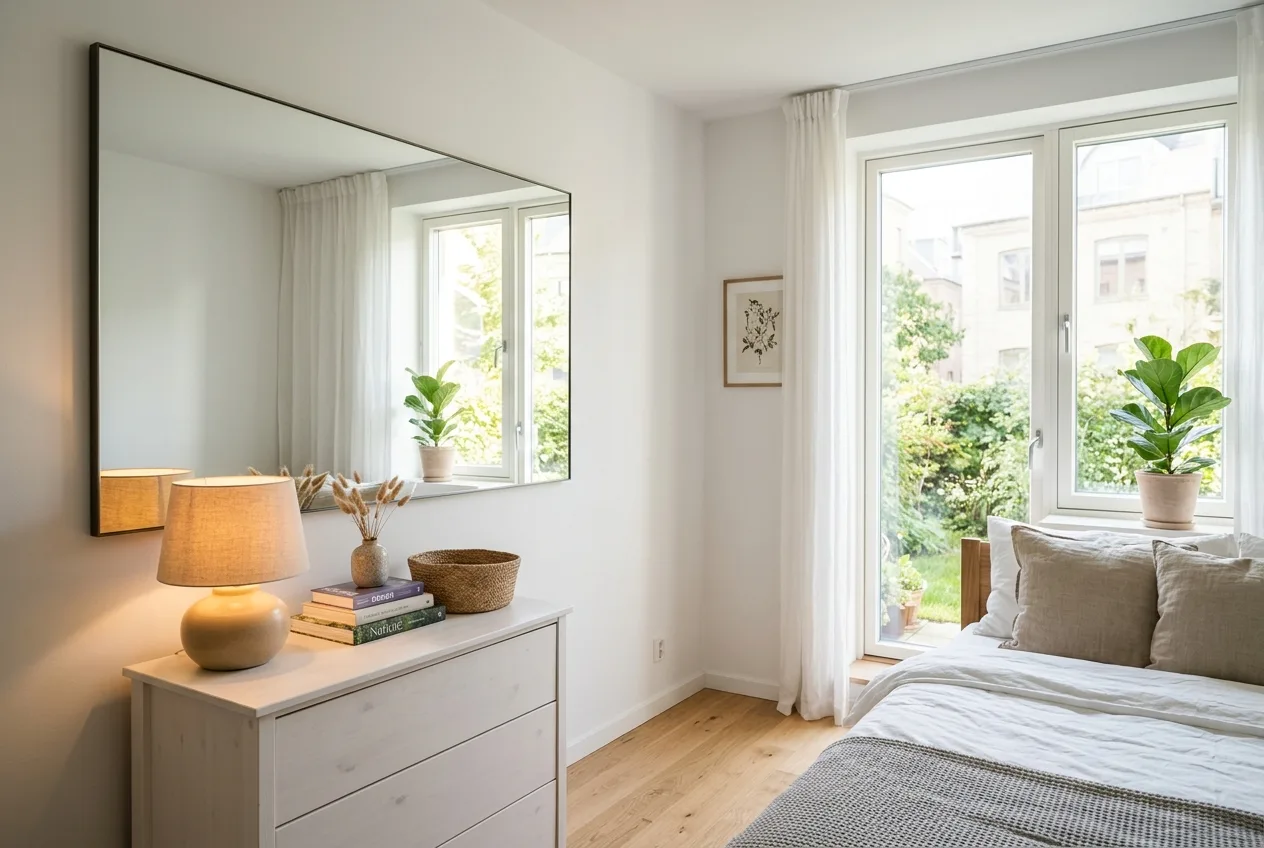
Avoid placing small mirrors haphazardly across the room. One large, clean mirror makes a much stronger impact than four small decorative frames.
Replacing Single Ceiling Lights with Warm Low-Level Lamps
A single bright ceiling bulb flattens a room. It casts heavy downward shadows that make walls feel closer together.
Instead, layer your lighting across three distinct height levels. Place low table lamps on nightstands, mount warm reading sconces at shoulder height, and add floor uplighting in dark corners.
Spreading soft pools of warm light breaks up harsh shadows. The varied light pockets give your bedroom visual depth during evening hours.
Adding Cozy Fabrics and Rugs Without Crowding the Room
Soft textures prevent bright bedrooms from feeling plain. You can build comfort directly into everyday fabrics without cluttering surfaces.
Sizing Rugs and Bedding to Anchor the Space
Texture brings warmth without physical clutter. You do not need extra decorative objects on your dressers to make a room feel comfortable.
Layer linen duvet covers, waffle-weave throws, and velvet cushions directly on the bed. These rich textures add tactile interest without consuming an inch of floor space.
Pay close attention to rug sizing. A tiny rug floating beside the bed cuts the floor into small fragments. Choose a rug large enough to extend at least 18 to 24 inches beyond the sides of your bed frame. A larger rug unifies the layout and makes the floor space look continuous.
Hanging Curtains Near the Ceiling Line to Draw the Eye Up
Standard window curtains often shorten a wall when installed incorrectly.
Mount your curtain rod 4 to 6 inches above the window frame, or right below the ceiling trim. Choose sheer or lightweight linen drapes that reach all the way down to the floor.
This placement draws the eye upward along the entire vertical wall. Long, light-filtering panels let soft sunlight filter through while making low ceilings feel noticeably higher.
Decorating Mistakes That Shrink a Compact Bedroom
Small layout errors can quickly negate your design efforts. Steer clear of these two widespread decorating traps.
Scattering Tiny Decor Items Instead of One Statement Piece
The mistake most people make here is assuming small rooms require small artwork and tiny knick-knacks.
Filling surfaces with dozens of small frames, candles, and trinkets creates visual noise. Your eyes have nowhere to rest, which makes the room feel crowded.
Instead, stick to the one-piece rule. Hang one large piece of art above the headboard rather than a gallery wall of tiny frames. A single clean focal point relaxes the eye and organizes the space.
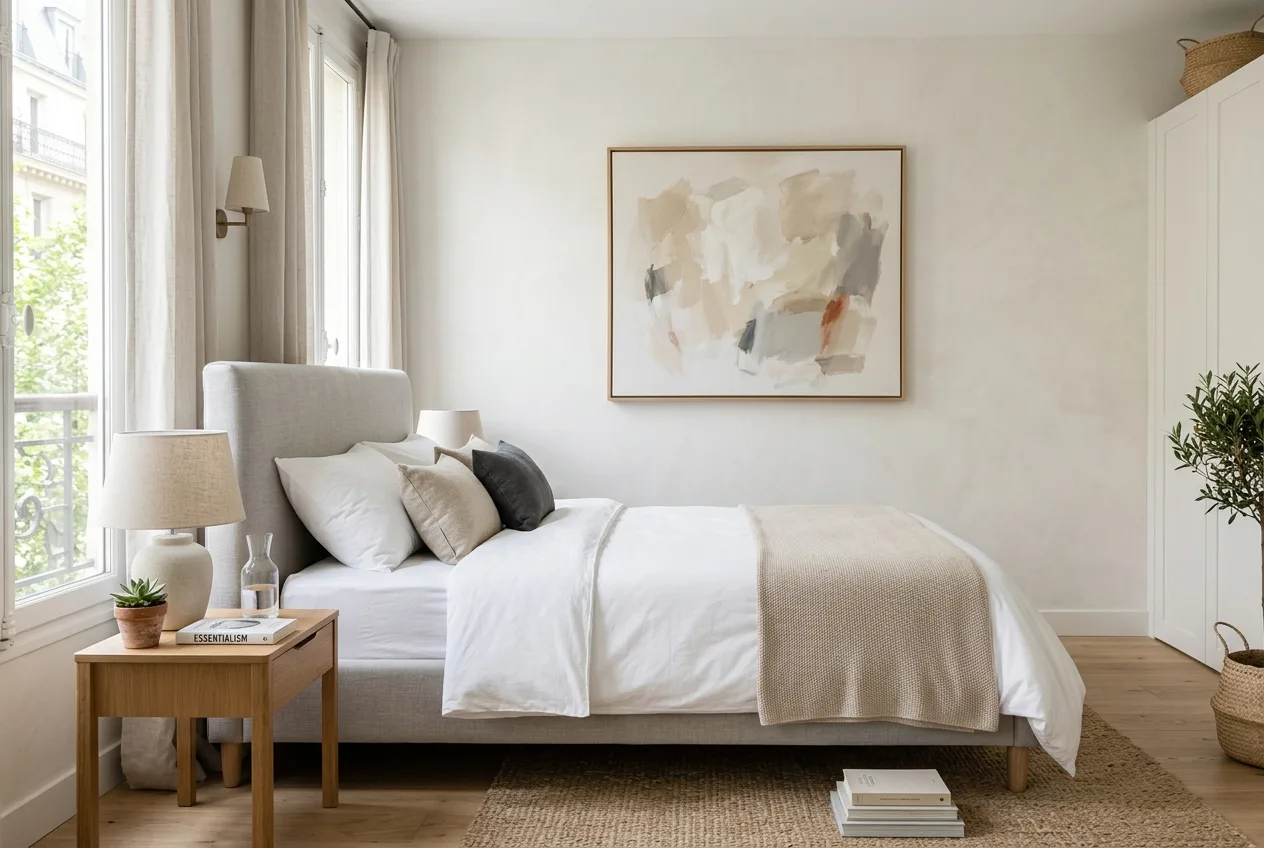
Buying Solid Boxy Furniture That Blocks Natural Floor Light
Another common error is buying heavy storage units that sit flush against the floorboard.
Heavy wooden dressers, solid platform frames, and boxed nightstands create visual dead zones. They trap shadows and prevent light from traveling across the room.
Whenever possible, pick leggy alternatives or floating wall units. Keeping the floor perimeter visible is one of the fastest ways to maintain an open feel.
Balancing Open Sightlines with Warm Bedroom Layers
Creating a spacious bedroom does not require sacrificing comfort. You do not have to live in a minimalist box to enjoy an airy room.
Focus on clear floor sightlines, warm lighting layers, and deliberate curtain placement. When you let light move under furniture and upward toward the ceiling, your room expands naturally.
Start with one change this weekend. Swap your heavy bedside table for a wall-mounted shelf or raise your curtain rods. You will notice the breathing room immediately.
Sources
- The Spruce — Small Bedroom Design Strategies & Layout Tips
- Apartment Therapy — Color Drenching & Optical Illusions for Small Spaces
- Real Homes — Maximizing Floor Space & Vertical Storage
- TLC Interiors — Choosing Furniture with Legs & Scale Considerations
- Harbour Lifestyle — Layering Lighting and Textiles in Compact Bedrooms
- West Homes — Light Palettes, Mirror Placement, and Natural Light Maximization
Quick Comparison
| Design Element | Recommended Solution | Common Error to Avoid | Primary Visual Benefit |
|---|---|---|---|
| Wall Paint | Warm neutrals (cream, beige) or full color drenching | Stark pure white with cold undertones | Reflects light and blurs hard corner boundaries |
| Furniture Profile | Slender exposed legs or floating wall mounts | Solid boxy bases resting flat on floorboards | Keeps floor sightlines open and eliminates heavy shadows |
| Lighting Setup | Three-level layered lamps (table, sconce, floor) | Single bright overhead ceiling fixture | Adds depth pockets and eliminates flat downward shadows |
| Floor Rug Sizing | Rug extending 18–24 inches past bed frame sides | Tiny floating rug beside the bed | Unifies floor layout into one continuous space |
| Curtains Placement | Rod mounted 4–6 inches high, floor-length drapes | Rod mounted flush atop window frame | Draws eye upward to maximize perceived vertical height |
| Wall Decor | One large statement artwork above headboard | Scattered gallery wall of small frames & trinkets | Provides a calm focal point without visual clutter |
Frequently Asked Questions
Why does pure white paint make a small bedroom feel cold?
Pure stark white paint lacks warm undertones to catch natural sunlight. In rooms with low daylight, it often looks gray and gloomy rather than bright. Choosing soft cream, warm beige, or pale warm gray with yellow, red, or peach undertones reflects light across walls without harsh glare.
What is color drenching and how does it expand a compact space?
Color drenching involves painting walls, trim, doors, and baseboards in a single rich color like deep navy or dark olive green. Removing the contrast of white baseboards erases hard perimeter edges, causing room boundaries to visually dissolve so the space feels intimate instead of tight.
How large should a bedroom rug be in a small space?
Choose a rug large enough to extend at least 18 to 24 inches beyond the sides of your bed frame. A large rug unifies the layout into a continuous visual surface, whereas a tiny rug floating beside the bed fragments the floor and makes the room feel smaller.
Where should curtain rods be placed to make ceilings feel taller?
Mount curtain rods 4 to 6 inches above the window frame or directly below the ceiling trim, letting lightweight drapes hang all the way to the floor. This placement directs the eye along the full vertical height of the wall, making low ceilings feel noticeably higher.
How should you layer lighting in a compact bedroom?
Layer lighting across three distinct height levels using low nightstand lamps, shoulder-height reading sconces, and floor uplighting in dark corners. Spreading soft pools of light across different heights breaks up harsh downward shadows and adds visual depth to the room.
