
You added the throw pillows. You bought the blankets. You even lit a candle. And somehow your living room still looks like a clearance aisle instead of the warm retreat you had in mind.
The problem usually isn’t that you need more stuff. It’s the opposite. Most rooms that feel cold or uninviting have too many things competing for attention, not too few.
Coziness comes from how a room feels against your skin, how light moves through it, and whether your eye has somewhere to rest. Get those three things right and the whole space shifts — without adding a single new object to the pile.
Why Decluttering Comes Before Decorating
This is the step people skip. They see a bare corner and immediately want to fill it. But every surface you clear gives your eye a place to land. That visual breathing room is what separates a cozy room from a chaotic one.
Start with the Flat Surfaces
Coffee tables, side tables, mantels, media consoles — these are clutter magnets. Take everything off. All of it. Then put back only what earns its spot: something useful, something beautiful, or something that makes you stop and smile.
This sounds brutal, but it works fast. Most people discover that half the items on their surfaces are things they stopped noticing months ago. If it’s invisible to you, it’s just visual noise.
The One-In, One-Out Rule
Clutter doesn’t happen in a single weekend shopping trip. It builds up slowly — a new candle here, a gifted figurine there. The one-in, one-out rule stops the creep. Every time something new comes in, something existing leaves.
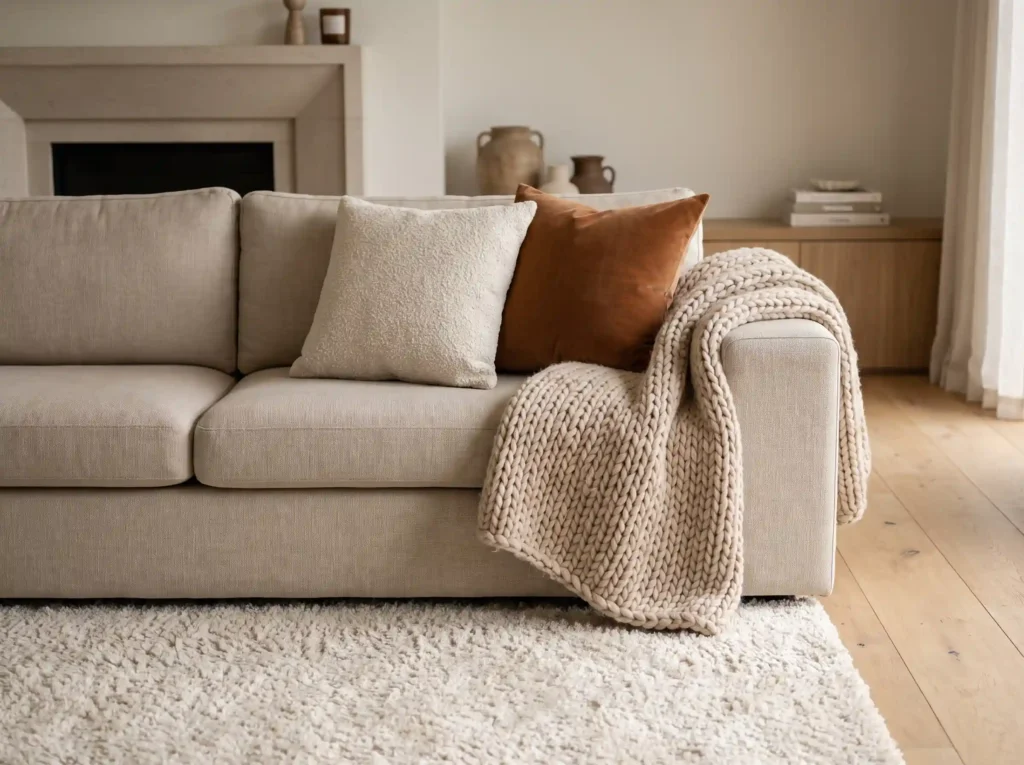
This works especially well with throw pillows and blankets. People accumulate these without realizing it. Three pillows arranged with intention look polished. Seven pillows crammed on a sofa look like a fort.
Storage That Keeps the Room Clean Without Looking Sterile
When your daily life is on constant display — remotes scattered, cables draped, board games on the floor — the room can’t feel restful. You need places for those things to disappear.
Furniture That Doubles as Storage
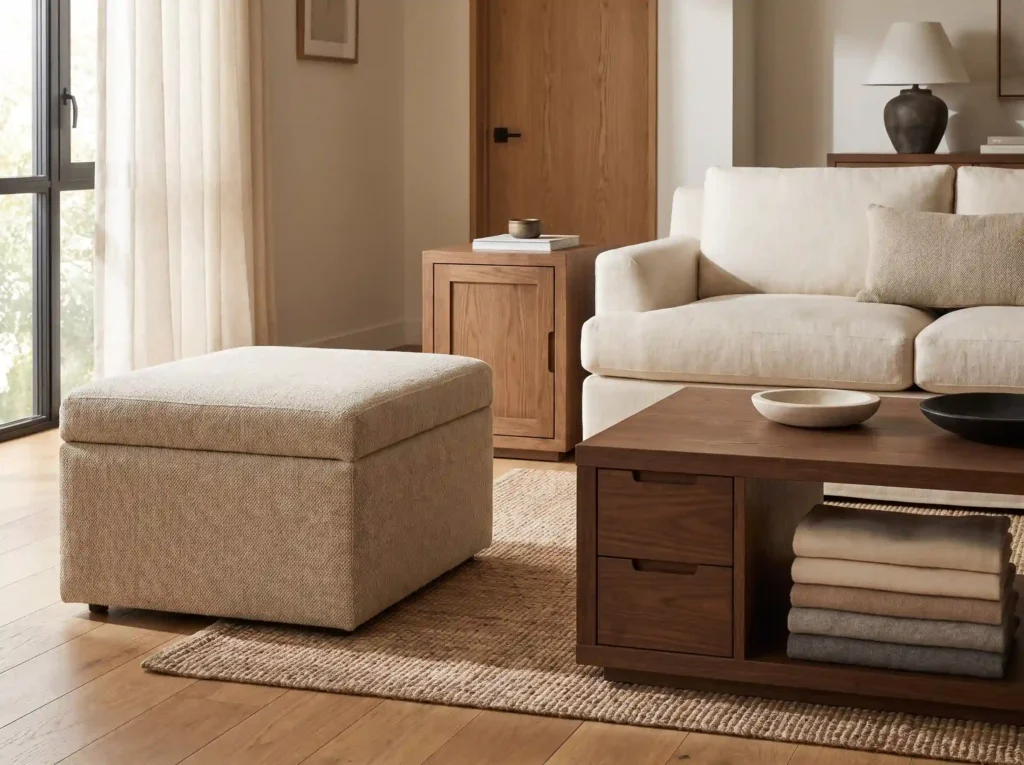
The easiest win here is a storage ottoman. Get a plush one with a lift-up lid. It holds blankets, games, or whatever you need hidden, and it pulls double duty as a footrest or extra seating when guests come over.
- Drawered coffee tables keep remotes, coasters, and reading material tucked away instead of spread across the surface.
- Enclosed side tables with cabinet doors hide chargers, small electronics, and odds and ends that open-leg designs put on full display.
The pattern is simple. If a piece of furniture can store something behind a door or under a lid, it’s doing two jobs at once.
Vertical Storage and Lidded Baskets
Floor space is expensive in a living room. Every square foot you keep open makes the room feel larger and calmer. Tall bookshelves and floor-to-ceiling cabinets store more while using less floor area than wide, low units.
For the small stuff — kids’ toys, craft supplies, loose chargers — woven seagrass or fabric baskets with lids are the move. They corral the mess while adding natural, earthy texture to your shelves. Open baskets look great on Instagram but collect dust and show everything inside. Lids solve both problems.
Taming the Cord Tangle
This is one of those details most people overlook. You can have beautiful furniture, perfect lighting, and a great color palette. A knot of black cables behind the TV still ruins the whole effect.
A simple cable management box costs under twenty dollars and hides every cord behind your entertainment center. For floor lamps, run the cord along the baseboard with adhesive clips. It takes maybe ten minutes and the visual difference is immediate.
How Texture and Lighting Create Warmth Without Adding Clutter
Here’s the part most people get backwards. They buy decorative objects to fill a room when what they actually need is better fabric and better light. Texture and lighting are the two biggest drivers of coziness, and neither one takes up extra floor space.
Mixing Fabrics for Depth
A room with one texture feels flat. A room with three or four textures feels layered and rich. The trick is contrast.
- On the sofa: If your couch is smooth leather or linen, pair it with velvet or bouclé cushion covers. The difference in feel draws people in.
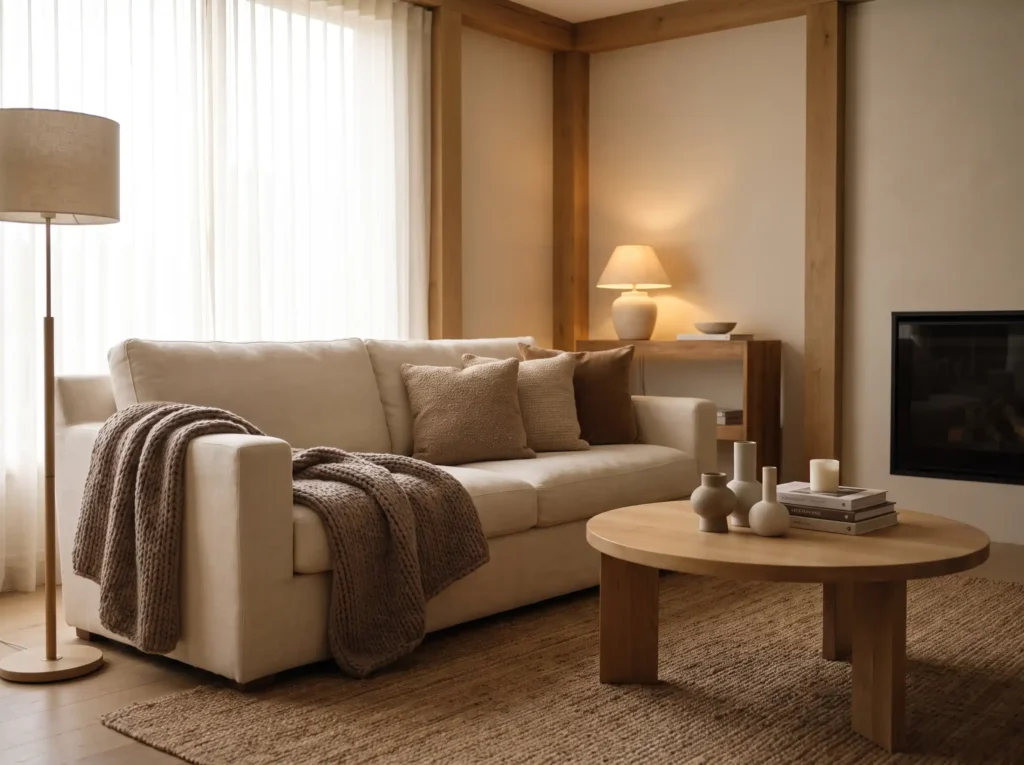
- For throws: One high-quality wool or chunky knit throw draped over an armrest does more than three thin synthetic blankets piled up. Quality beats quantity every time.
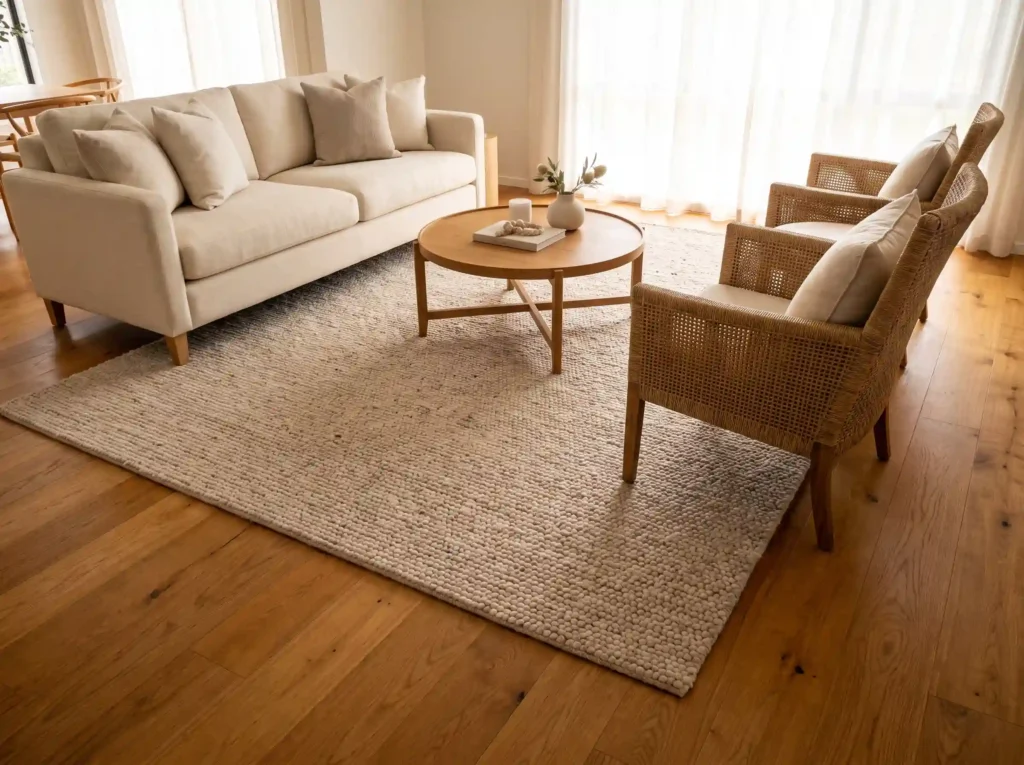
- On the floor: Layer a soft wool or deep-pile area rug over hard flooring or a flat jute mat. That layered look grounds the seating area and adds warmth underfoot.
What usually happens in practice: people buy matching cushions in the same fabric as their sofa. Same color, same texture. It looks coordinated, sure — but it also looks flat. Contrast is what your eye reads as cozy.
Layered Lighting at Different Heights
If your living room has one overhead light and nothing else, that’s probably why it feels cold at night. A single bright fixture casts even light everywhere. No shadows, no depth, no warmth. It’s the lighting equivalent of a hospital waiting room.
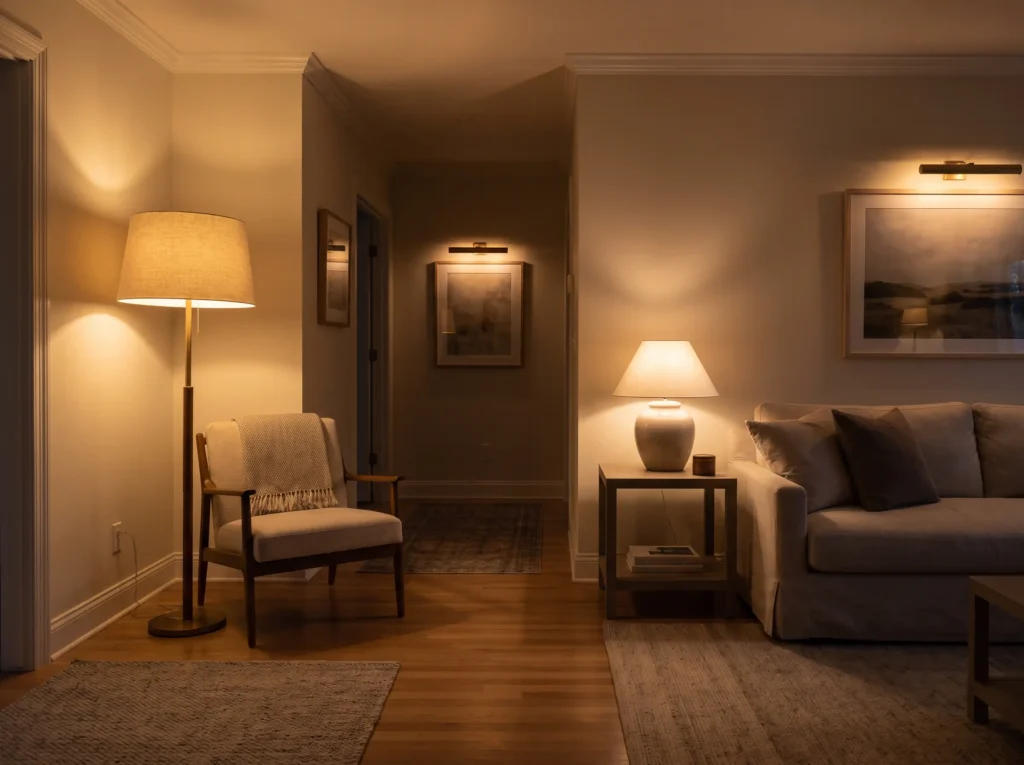
The fix is layering light sources at different heights. A floor lamp in a corner, table lamps on end tables, maybe a pair of sconces near artwork or a fireplace. Each source creates its own pool of warm light. Those overlapping pools are what make a room feel inviting after dark.
One detail that makes a surprisingly big difference: bulb color temperature. Look for warm-toned LEDs rated between 2700K and 3000K. Anything above 4000K gives off a bluish-white glow that reads as clinical. Swapping bulbs alone can change how a room feels in the evening. Add a dimmer switch and you go from “bright enough to read” to “relaxed movie night” in one turn.
Color, Rug Sizing, and Layout Rules Worth Following
Professional designers follow certain formulas. Not because they lack creativity — because these ratios work consistently across different room sizes and styles. Three of them come up over and over.
The 60-30-10 Color Ratio
This is a simple framework for keeping your palette balanced:
- 60% dominant color — walls, large rugs, and your main sofa. Soft neutrals work best here: warm beige, cream, or soft gray. These form the quiet background everything else sits against.
- 30% secondary color — curtains, accent chairs, secondary textiles. This is where you build depth: warm taupe, muted sage, or navy.
- 10% accent color — throw pillows, small ceramics, artwork. Terracotta, mustard, or forest green in small doses. Personality without chaos.
The reason this ratio works: it gives your eye a clear hierarchy. You know where to look first, second, and third. Without that hierarchy, every element competes equally and the room feels busy — even when it isn’t actually overcrowded.
How to Size and Place Your Area Rug
Rug sizing is probably the most common mistake in living room design. People buy a rug that’s too small, center it under the coffee table, and wonder why the room feels disjointed.
The standard guideline is the front legs rule. At least the front legs of your sofa and accent chairs should sit on the rug. This visually ties the seating group together into one conversation area. For most living rooms, that means an 8×10 foot rug at minimum.
Before buying, lay painter’s tape on your floor in the dimensions you’re considering. Live with it for a day. You’ll see immediately whether it feels right — and it costs nothing to test.
Styling Surfaces with Trays and Balanced Arrangements
A coffee table with five random objects on it looks cluttered. The same five objects grouped on a wooden or brass tray look curated. The tray acts like a frame. It tells your eye this group of things belongs together.
A candle, a small vase, and a short stack of books inside a tray reads as one intentional display instead of three stray objects. Symmetry helps too. Matching lamps on flanking end tables, or identical vases on a mantel, create instant balance. Your eye registers it as calm before you think about why.
Mistakes That Make a Room Feel Cluttered Instead of Cozy
Even with good intentions, certain decorating habits quietly work against the cozy-but-clean effect you’re going for:
- Filling every shelf completely. Leave negative space around books and objects. That breathing room is what makes a bookshelf look styled instead of stuffed. Aim for about 30% empty space on any given shelf.
- Scattering small picture frames everywhere. A dozen small frames across three surfaces reads as clutter. One or two large gallery prints on a main wall make a stronger visual statement and free up table space.
- Pushing all furniture against the walls. This is instinctive — you think it opens up the room. In practice, it does the opposite. Pulling your sofa and chairs even six inches from the walls makes a big difference. This technique, called floating the furniture, creates a more intimate feel and better conversation flow.
- Blocking natural light with heavy drapes. Dark curtains make a room feel smaller and heavier during the day. Light-filtering panels let sunlight in while softening the window. Hang a mirror opposite a window to bounce natural light deeper into the room.
The One Change That Makes the Biggest Difference
If you take one thing from this entire guide, swap your overhead bulbs for warm-toned LEDs and add a single table lamp. That change shifts how your room feels more than any pillow, throw, or decorative object ever will.
Coziness isn’t about how much is in the room. It’s about how the room makes you feel when you sit down. Get the light right, get the texture right, give your eyes somewhere to rest — and the warmth takes care of itself.
Quick Comparison
| Storage Solution | Best For | Storage Type | Secondary Benefit |
|---|---|---|---|
| Storage Ottoman | Blankets, board games, hidden clutter | Enclosed with lift-up lid | Doubles as footrest or extra seating |
| Drawered Coffee Table | Remotes, coasters, reading material | Built-in drawers | Keeps table surface clear of visual clutter |
| Enclosed Side Table | Chargers, small electronics, odds & ends | Cabinet doors | Hides visual mess of open-leg designs |
| Lidded Baskets | Kids’ toys, craft supplies, loose cables | Woven fabric/seagrass with lid | Corrals mess while adding natural texture |
Frequently Asked Questions
Why does my living room still feel cold after adding decorative objects?
Adding too many decorative items creates visual noise rather than warmth. Coziness comes from tactile textures, warm layered lighting, and visual negative space that gives your eyes a place to rest, not from accumulating extra objects.
What is the 60-30-10 color rule in interior design?
The 60-30-10 rule is a practical framework for color balance: 60% of the room uses a dominant neutral (walls, sofa, rug), 30% features a secondary color (curtains, accent chairs), and 10% incorporates an accent color (pillows, artwork). This hierarchy prevents colors from competing for attention.
How big should an area rug be in a living room?
An area rug should be large enough that at least the front legs of your main sofa and accent chairs rest comfortably on top of it. This visually anchors the seating group into a single conversation area, which usually requires at least an 8×10 foot rug for standard living rooms.
What color temperature bulbs should I use for a cozy atmosphere?
Choose warm-toned LED bulbs rated between 2700K and 3000K. Bulbs higher than 4000K produce a cool, bluish-white light that feels clinical, while warm LEDs cast inviting pools of light throughout the space.
What is floating furniture and how does it help a living room layout?
Floating furniture means pulling sofas and accent chairs a few inches away from perimeter walls rather than pushing them flat against the edges. This arrangement creates a more intimate seating zone and improves overall conversation flow.
Sources
- Architectural Digest: Cozy Living Room Design Principles & Lighting
- The Spruce: Living Room Decluttering and Storage Guide
- Martha Stewart: Living Room Organization & Decor Strategies
- Real Simple: Clutter-Free Living Room Layouts & Storage Solutions
- Apartment Therapy: Multi-Functional Furniture & Cord Management
- Homes & Gardens: The 60-30-10 Color Rule and Rug Placement
